

What Is the Difference Between Class A, Class B, and Class C Motorhomes?
When people picture a motorhome, they usually imagine something big rolling down a highway — but "motorhome" is actually a category with three very distinct classes inside it. Class A, Class B, and Class C motorhomes look different, drive differently, live differently, and serve fundamentally different buyer needs.
If you're trying to figure out which class makes sense for you, this guide breaks it down plainly — what each class actually is, what it's built on, who it's designed for, and where each one fits in the bigger picture.
What Makes a Motorhome Different From a Trailer?
Before diving into the classes, it's worth being clear on one thing: all three classes discussed here are motorized — meaning they have their own engine and drivetrain. You don't need a separate tow vehicle. You get in, start it up, and drive. That's the single biggest distinction between any motorhome and towable options like travel trailers or fifth wheels.
Within the motorhome category, the class designation is determined primarily by the chassis the unit is built on and the overall size and configuration of the living space. Think of Class A as the top floor, Class B as the ground floor, and Class C as the middle — each one a genuine home on wheels, just scaled and configured for different kinds of travelers.
Class A Motorhomes: Maximum Space, Maximum Living
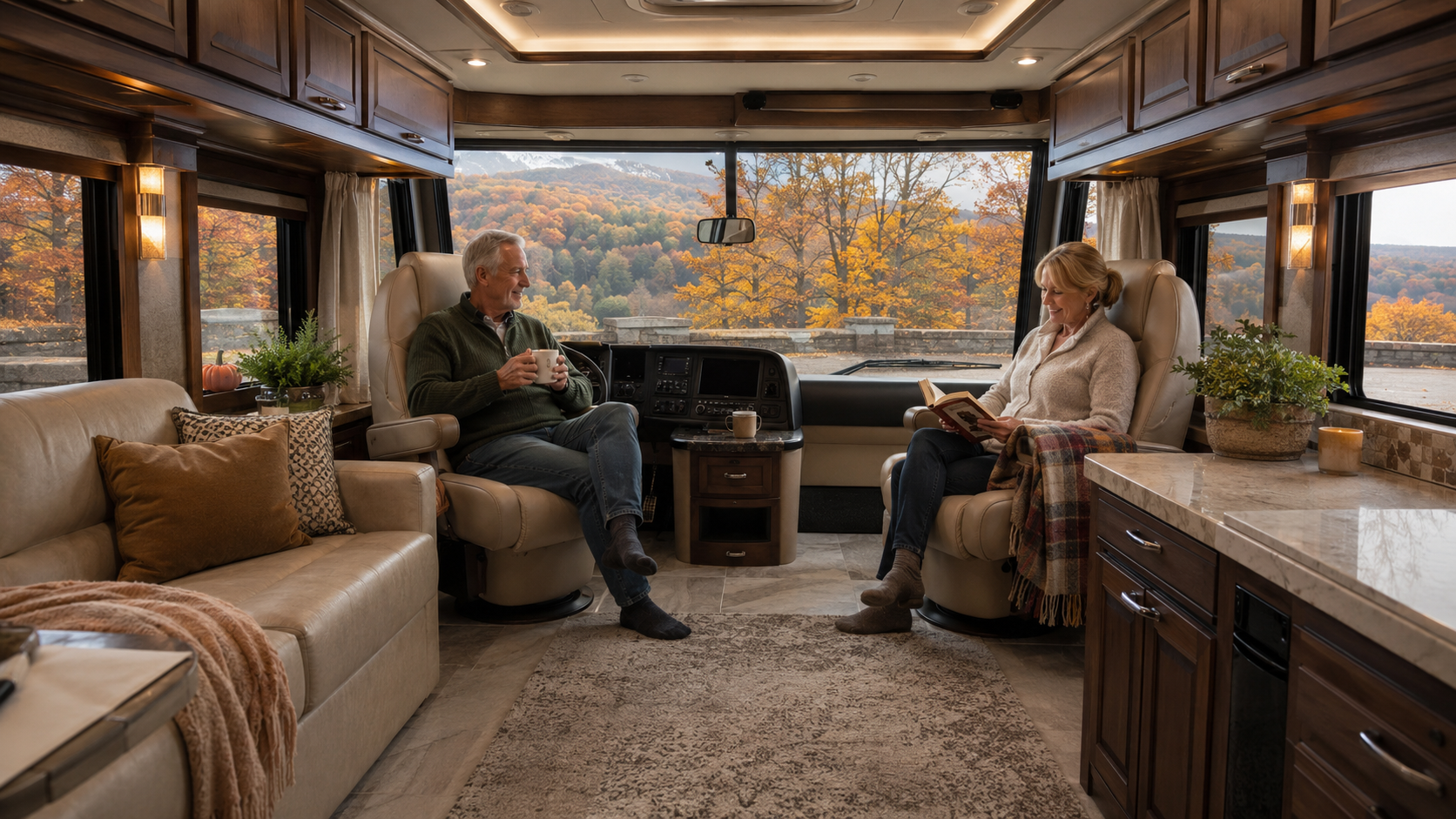
Class A motorhomes are built on heavy-duty commercial bus or truck chassis — the same structural DNA as the big 18-wheelers you pass on the highway. That foundation allows for units ranging from 29 to 45 feet in length, with ceiling heights and interior volumes that make some Class As feel less like a vehicle and more like a well-designed apartment.
The defining visual feature is a flat, vertical front face — no hood, no cab extending forward. From the driver's seat, you have an enormous panoramic windshield and sightlines that stretch far ahead. When parked, the cockpit chairs typically swivel around to become usable living room seating — something Class C buyers genuinely miss.heathandalyssa+1
Inside a Class A, you can expect:
A private rear bedroom with a door that closes and often a king or queen bed
Full residential kitchen with a full-sized refrigerator, oven, and multiple burners
A full bathroom with a separate shower and in many cases a bathtub
Multiple slide-outs that extend the living room, dining area, and bedroom width dramatically
Substantial exterior storage bays for gear, tools, and equipment
Large holding tanks for fresh water, grey water, and black water — critical for boondocking
Class A motorhomes run on either gas or diesel. Diesel pushers — where the engine sits at the rear of the coach — are the top-tier configuration, delivering a smoother, quieter ride, better torque for mountain driving, and stronger towing capacity if you want to pull a car or boat behind the rig.
Who it's for: Retirees, full-timers, and long-haul travelers who want residential-quality living space and aren't interested in compromising. If you plan to spend weeks or months at a time on the road, Class A is built for that lifestyle. Zoomers RV carries 10 Class A units across their Indiana and Illinois locations.
Class B Motorhomes: Compact, Capable, and Built for Freedom
Class B motorhomes — commonly called campervans — are built on van chassis, most often a Mercedes-Benz Sprinter, RAM ProMaster, or Ford Transit. They're the smallest of the three motorhome classes, typically running 18 to 24 feet in length, and they look almost indistinguishable from a standard cargo or passenger van from the outside.
That understated profile is a feature, not a limitation. Class B vans park in standard parking spaces, navigate city streets without a second thought, fit in campsite spots that would turn away a larger rig, and access backcountry roads that are firmly off-limits to Class A coaches. For buyers who want to travel without announcing their presence at every stop, the Class B is purpose-built for that.
Inside, the space is compact but thoughtfully engineered. You'll find:
A convertible sleeping area — often a bed that folds out from the rear or drops from overhead
A kitchenette with a two-burner cooktop, compact refrigerator, and sink
A wet bath — a small bathroom where the toilet, shower, and sink share the same compact space
Built-in storage optimized for the available footprint
Increasingly common: solar panels, lithium battery systems, and 4x4 drivetrain options for off-grid capability
Class B vans get the best fuel economy of the three classes and are the easiest to drive — if you're comfortable in a large van, you're comfortable in a Class B. They hold their resale value exceptionally well, partially because their van chassis components are serviced at any Mercedes or Ford dealer nationwide — not just RV service centers.
Who it's for: Couples, solo travelers, remote workers, and adventure-focused buyers who value flexibility and maneuverability over square footage. The van-life movement has significantly broadened the Class B audience over the past decade, and the Winnebago Solis is one of the most popular representatives of what this class has become. Zoomers RV carries Winnebago inventory for buyers exploring this category.
Class C Motorhomes: The Family-Friendly Middle Ground
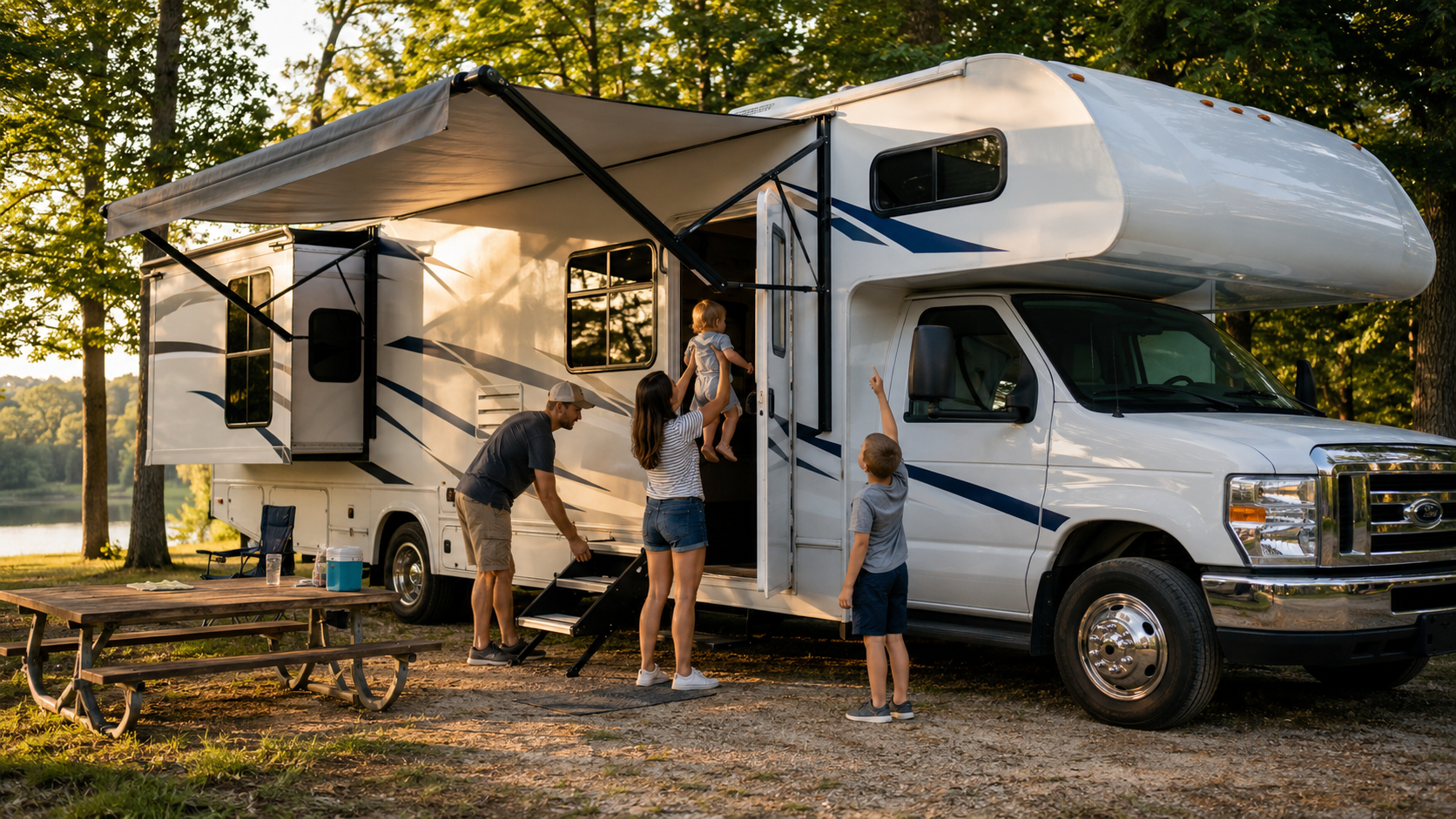
Class C motorhomes are built on a truck or van cutaway chassis — typically a Ford E-Series or Chevy/GMC cutaway — with the cab section remaining as part of the unit. The result is the most recognizable shape in the motorhome world: that signature over-cab sleeping area extending above the driver and passenger seats.
That over-cab extension is more than just an aesthetic identifier — it's functional square footage that makes Class C units significantly more livable per foot than a Class B while remaining more maneuverable and approachable to drive than a full Class A. Most Class C drivers describe the experience as similar to driving a large van — familiar, manageable, and far less intimidating than piloting a 40-foot bus-style coach.
A well-configured Class C delivers:
An over-cab sleeping area that comfortably sleeps 2 adults or 2–3 children — excellent for families
A full kitchen with oven, microwave, and full-sized refrigerator in larger floor plans
A full bathroom with separate shower and privacy door
Slide-outs in most units, expanding the living room and bedroom width
Built-in awning, outdoor storage, and towing capacity for a car or small boat
Sleeping capacity for 4 to 8 people depending on floor plan
Class C motorhomes generally cost less than comparable Class A coaches and are available from nearly every major RV manufacturer — making the selection wide and the competition among brands healthy for buyers. Zoomers RV carries 22 Class C motorhome units, making it the deepest motorhome category in their inventory.
Who it's for: Families, first-time motorhome buyers, and anyone who wants the livability of a motorhome without the complexity of driving a full-size Class A. If you have kids, frequently camp with extended family, or simply want a unit that's forgiving to drive and doesn't require special licensing, Class C is where most buyers land for good reason.
The Honest Tradeoffs: What Each Class Gets Right and Wrong
Every class involves genuine tradeoffs. Here's what experienced motorhome owners consistently point out:
Class A strengths: Panoramic views, biggest holding tanks, swivel cockpit chairs become usable living space, best under-storage volume, diesel pushers offer a notably smoother and quieter highway ride.
Class A tradeoffs: Highest fuel costs, widest turning radius, most expensive to insure and maintain, requires the most practice to drive comfortably.
Class B strengths: Parks anywhere, best fuel economy, easiest to drive, stealth camping capability, van chassis serviced at dealers nationwide, strong resale value.
Class B tradeoffs: Limited interior space for more than two people, small holding tanks mean frequent fills and dumps when off-grid, minimal exterior storage.
Class C strengths: Best balance of family capacity and driveability, wide floor plan selection, most accessible price point in the motorhome segment, over-cab space adds meaningful sleeping or storage.
Class C tradeoffs: Over-cab area isn't usable while driving, smaller tanks than Class A, driving cab area can't convert to living space when parked.
Which Class Is Right for You?
Three questions cut through the noise faster than any spec sheet:
How many people are you sleeping? If it's just two of you, a Class B may be all you need. A family of four or five lands firmly in Class C territory. Six or more people traveling together regularly points toward Class A.
How do you plan to drive? If navigating tight campgrounds, city streets, and unfamiliar roads sounds stressful, start with Class B or Class C — both are significantly easier to manage than a full-size Class A.
How long are your trips? Weekend getaways suit Class B or Class C perfectly. Full-timing or extended cross-country travel — months at a time — is where Class A's larger tanks, more storage, and residential-quality living space start to justify the step up.
Explore Motorhomes at Zoomers RV
Zoomers RV carries both Class A and Class C motorhomes in active inventory across their Indiana and Illinois locations — 10 Class A units and 22 Class C units — from manufacturers including Forest River, Coachmen, and Winnebago.
Whether you're buying your first motorhome or upgrading from a towable, our team in Wabash, IN is here to walk you side by side through every class, every floor plan, and every feature that matters for how you actually travel.
Browse our full motorhome inventory online or visit us at 2503 E. State Rd. 524, Wabash, Indiana. Call anytime at (855) 263-0458 — we're here to make this decision easy.