
Gas vs Diesel Motorhome: Which Should You Buy?
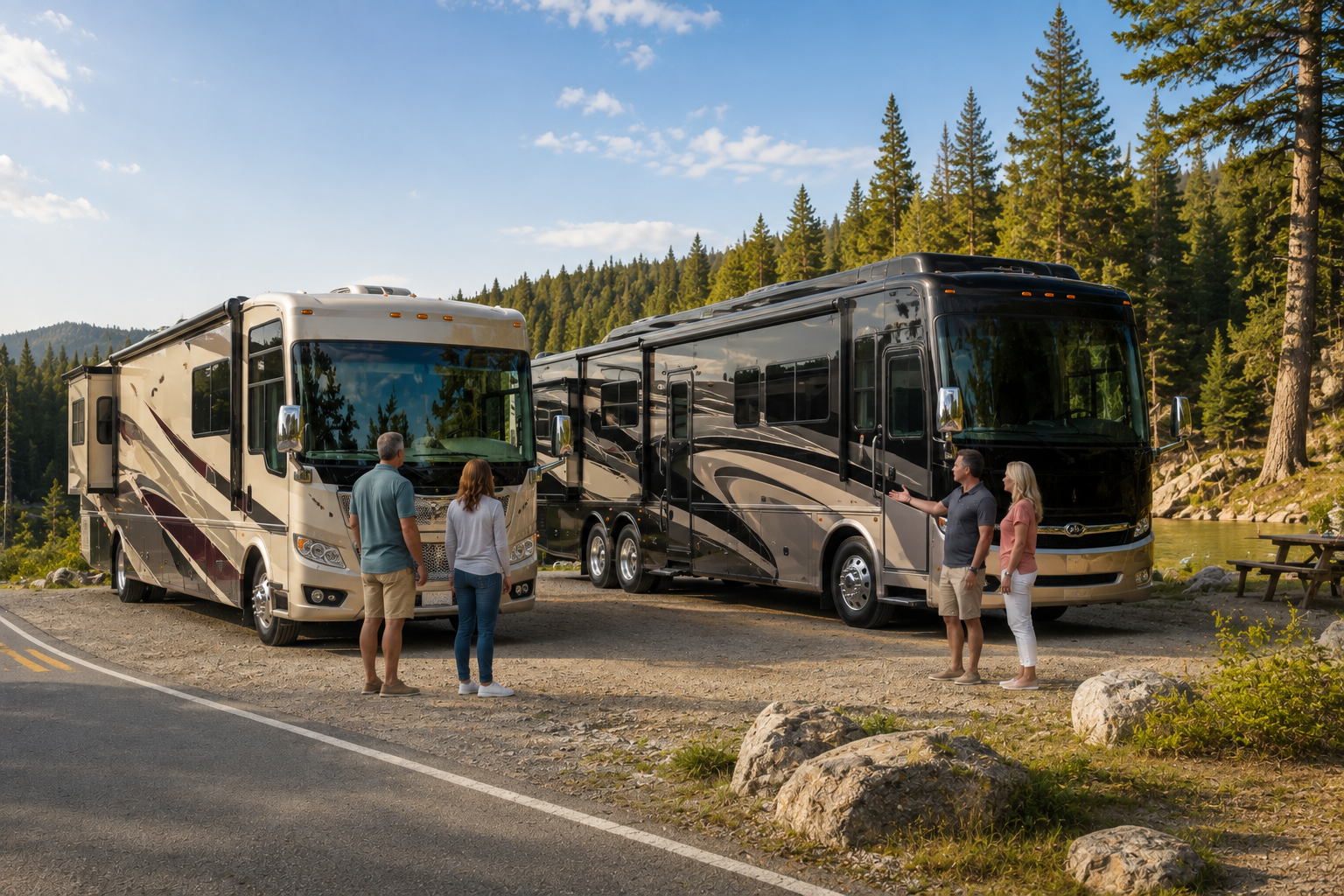
Choosing between a gas vs. diesel motorhome is one of the biggest decisions you will make when shopping for a motorized RV.
Both can give you the freedom to travel with your kitchen, bathroom, bedroom, storage, and living space all in one vehicle. But the ownership experience can be very different.
Gas motorhomes often appeal to buyers looking for a lower purchase price, simpler ownership, and easier access to service. Diesel motorhomes are typically favored by RVers who want stronger towing capability, greater torque, premium ride characteristics, and a coach designed for extensive highway travel.
Zoomers RV currently carries Class A, Class C, and Super C motorhomes, including both gas and diesel-powered options, which gives shoppers an opportunity to compare the two approaches in actual RV floorplans.
So which one should you buy?
The best answer depends less on which fuel is "better" and more on how you plan to use your motorhome.
What Is the Main Difference Between a Gas and Diesel Motorhome?
The most obvious difference is the engine, but choosing gas or diesel affects much more than what you put in the fuel tank.
Gas motorhomes commonly use a gasoline-powered chassis designed to balance capability with a relatively approachable purchase and ownership experience.
Diesel motorhomes often use heavier-duty chassis and engines designed to produce substantial torque at lower engine speeds. Freightliner Custom Chassis, for example, says its diesel motorhome chassis are designed around increased torque, towing strength, cargo capacity, and long-distance performance.
The result is that gas and diesel coaches can feel very different on the road even when their interiors appear similar.
Why Buy a Gas Motorhome?
For many families and recreational travelers, a gas motorhome provides everything they actually need without requiring the investment associated with a large diesel coach.
Gas Motorhomes Usually Cost Less to Buy
One of the biggest attractions of gas-powered motorhomes is the potential for a lower purchase price.
Diesel coaches frequently use more expensive engines, transmissions, chassis components, suspension systems, and other heavy-duty equipment. They also tend to occupy the more premium end of the Class A and Super C market.
That means buyers who prioritize interior space and camping features rather than maximum towing capability may get more RV for their budget with a gas-powered model.
The savings could also leave more room in your budget for campground fees, fuel, accessories, insurance, and travel.
Gas Motorhomes Can Be Easier for Recreational Travelers
You do not need diesel capability simply because you want a large motorhome.
For weekend trips, family vacations, state park camping, and occasional cross-country travel, a properly selected gas Class A or Class C can be an excellent choice.
Gas-powered Class C motorhomes are particularly appealing to shoppers transitioning from SUVs, trucks, or towable RVs because their driving characteristics can feel more familiar.
Zoomers RV currently offers traditional Class C models as well as Class A motorhomes, allowing buyers to compare different sizes and configurations.
Gas Service Can Be More Accessible
Another practical consideration is where the motorhome can be serviced.
Gas-powered chassis may have access to a broader range of automotive or truck-service facilities, depending on the chassis and the repair involved.
That can be reassuring for travelers who spend most of their time close to populated areas or who simply want straightforward routine maintenance.
However, not every automotive service facility can accommodate a large motorhome, so owners should still verify that a shop can handle the vehicle's size and chassis.
What Are the Disadvantages of a Gas Motorhome?
Gas motorhomes are not automatically the cheaper or easier choice in every situation.
A large gas-powered coach may need to work harder on long grades or while towing compared with an appropriately equipped diesel coach.
You may also experience:
More engine noise under hard acceleration
Higher engine speeds on steep grades
Lower towing capacity on some models
Different ride characteristics than premium diesel chassis
Less cargo capacity on certain floorplans
These differences become increasingly important as the motorhome gets larger or your travel demands become more intensive.
Why Buy a Diesel Motorhome?
Diesel motorhomes tend to make the strongest case for themselves when you plan to travel extensively, tow heavier loads, or spend substantial time behind the wheel.
Cummins identifies fuel economy, operating efficiency, and reliability as important benefits of its diesel engines for motorhome applications.
Diesel Engines Produce Strong Low-RPM Torque
Torque matters in a large motorhome because you are moving a lot of weight.
Diesel engines are designed to deliver substantial torque at relatively low RPM, which can be useful when accelerating a heavy coach, climbing grades, or towing another vehicle.
Freightliner's XC diesel chassis, for example, offers engine configurations producing from 700 to 1,250 lb-ft of torque depending on the setup.
You do not necessarily need that kind of capability for occasional campground trips.
But for frequent mountain travel or extensive towing, it can become extremely valuable.
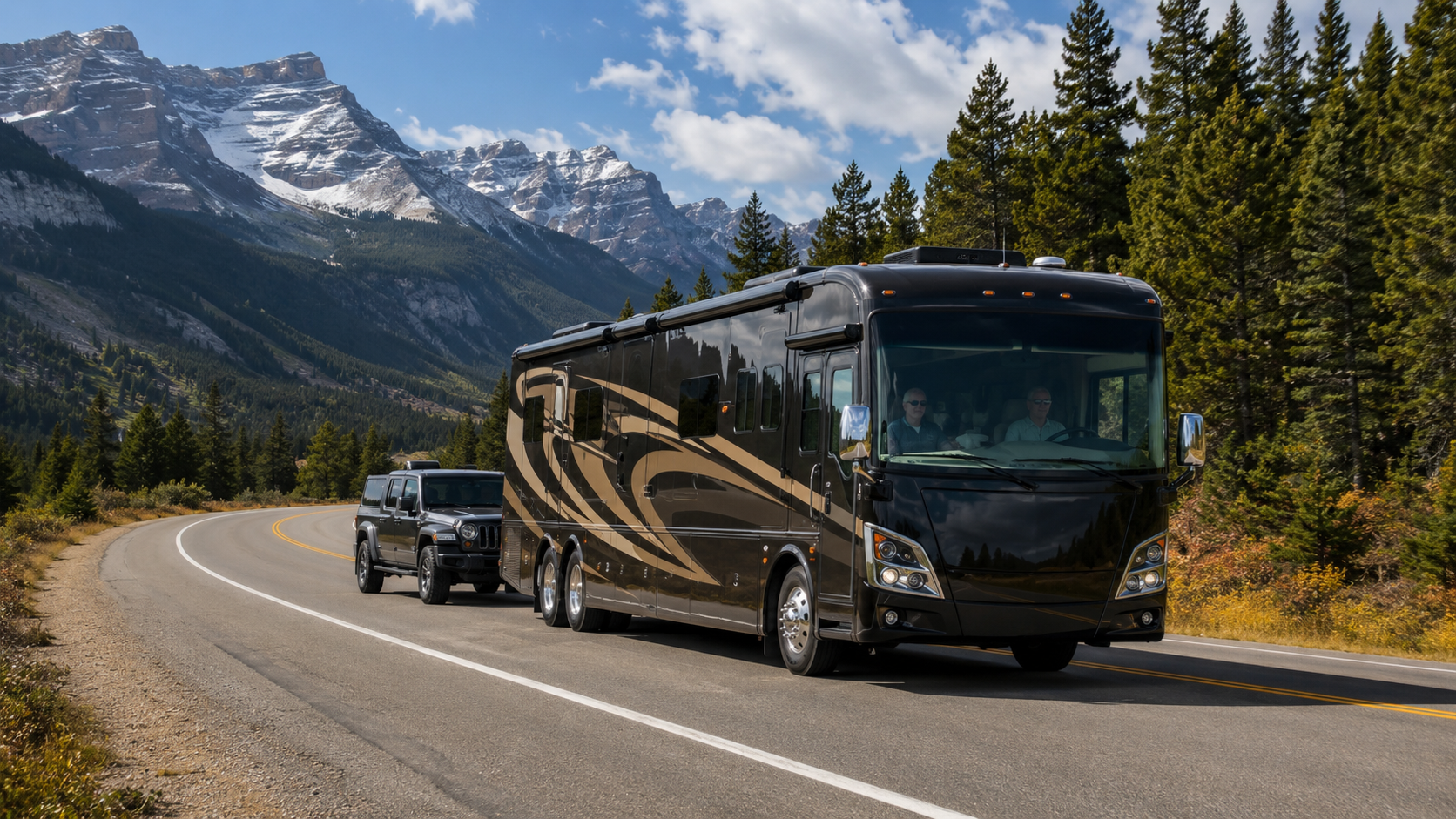
Diesel Motorhomes Are Often Better for Heavy Towing
If you plan to tow a vehicle, enclosed trailer, boat, or other substantial load behind your motorhome, diesel deserves serious consideration.
Heavy-duty diesel motorhome chassis are specifically designed to support greater towing and weight-carrying requirements.
Some luxury diesel platforms provide extremely high towing ratings. For example, the Freightliner-based Entegra Cornerstone configuration cited by Freightliner uses a Cummins X15 engine and is rated to tow up to 20,000 pounds. Actual towing capacity varies greatly by motorhome, chassis, hitch rating, loaded weight, and configuration, so buyers must always verify the ratings of the specific coach they are considering.
Diesel Coaches Can Offer a More Refined Ride
The engine is only part of the diesel-versus-gas story.
Many premium diesel motorhomes use heavier-duty chassis with air suspension and other systems designed specifically for large motor coaches.
Freightliner highlights air suspension, stability, braking performance, cargo capacity, and chassis technologies as important advantages of its diesel motorhome platforms.
This can become especially noticeable when you spend hours at a time on interstate highways.
A smoother, more stable driving experience may not sound like a major purchasing factor during a dealership walkthrough, but after a long travel day it can matter considerably.
Rear-Engine Diesel Motorhomes Can Be Quieter Up Front
Many Class A diesel pushers place the engine toward the rear of the coach.
That moves much of the engine noise and heat farther away from the driver's area.
For travelers who regularly cover hundreds of miles in a day, having quieter conversations and less engine noise near the front seats can make driving more comfortable.
This is one reason diesel pushers remain popular among full-time RVers and long-distance travelers.
What Are the Downsides of a Diesel Motorhome?
Diesel is not the automatic winner.
The additional capability comes with tradeoffs.
Diesel Motorhomes Can Cost More
Diesel-powered Class A and Super C motorhomes often cost more than comparable entry-level gas coaches.
Buyers are paying not only for the engine but also for the heavy-duty chassis, drivetrain, suspension, braking equipment, towing capability, and often more upscale interior features.
If you only take a few trips each year, you may never receive enough practical benefit from those upgrades to justify the additional cost.
Diesel Maintenance Can Be More Expensive
Routine service intervals may be longer for certain diesel components, but individual services can be more expensive.
Diesel engines can require:
More engine oil
Larger filters
Diesel-specific service expertise
Fuel filter replacement
Specialized emissions-system maintenance
Heavy-duty drivetrain servicing
Maintenance requirements vary by engine and chassis, so ownership costs should be evaluated for the specific motorhome rather than assuming every diesel coach will cost the same.
Gas vs. Diesel Motorhome for Mountain Driving
If your RV trips frequently take you through mountainous areas, diesel often has an advantage.
The combination of strong low-RPM torque and heavy-duty drivetrain design can help a diesel coach maintain performance while climbing grades.
Many diesel chassis also incorporate systems designed to improve control on descents.
That does not mean a gas motorhome cannot travel through the mountains.
It can.
The difference is that drivers who regularly encounter significant elevation changes may appreciate the additional capability of a diesel platform.
Gas vs. Diesel Motorhome for Cross-Country Travel
This is where your annual mileage becomes important.
If your motorhome will primarily be used for several shorter vacations each year, a gas coach can be a practical and economical option.
If you expect to spend months traveling across multiple states every year, diesel becomes more attractive.
Long-distance owners may place greater value on:
Highway ride quality
Fuel range
Torque
Towing capability
Cargo capacity
Driving comfort
Heavy-duty chassis construction
The more time you spend driving, the more those characteristics matter.
Which Is Better for First-Time Motorhome Buyers?
Many first-time motorhome buyers will be perfectly happy starting with a gas Class C or gas Class A.
The purchase price can be more approachable, and the RV may provide all the capability needed for normal recreational camping.
A first-time buyer should not automatically avoid diesel, though.
If you already know that you plan to travel extensively, tow a heavy vehicle, or eventually live in the RV for long periods, purchasing the motorhome that fits your long-term needs can prevent you from upgrading again sooner than expected.
Class A vs. Class C Matters Too
Do not focus exclusively on the engine.
The RV class and floorplan may have an even greater effect on your everyday camping experience.
A Class A motorhome generally emphasizes interior space and a large panoramic cockpit.
A Class C motorhome commonly uses a truck-style cab with an RV body behind it, often including an overhead sleeping area.
Then there are Super C motorhomes.
Super C coaches combine a large RV body with a heavy-duty truck-style diesel chassis, providing substantial towing capability while maintaining the familiar front-engine truck configuration.
Zoomers RV currently lists Super C motorhomes from manufacturers such as NeXus RV and Coachmen, including models like the NeXus Wraith, Ghost, Rebel, and Maximus along with the Coachmen Entourage.

Which Motorhome Should You Buy?
Choose a gas motorhome if you:
Want to keep the initial purchase cost lower
Mostly take weekends or shorter vacations
Do not plan to tow very heavy loads
Want a simpler entry into motorhome ownership
Prefer a Class C or moderately sized Class A
Drive a relatively modest number of miles each year
Choose a diesel motorhome if you:
Travel extensively
Frequently drive through mountainous areas
Need greater towing capability
Want a heavier-duty chassis
Value premium highway ride characteristics
Carry substantial cargo
Plan to use your motorhome for extended or full-time travel
Are considering a diesel pusher or Super C
Neither choice is universally better.
The right motorhome is the one whose chassis, floorplan, towing capacity, sleeping arrangements, storage, and overall ownership costs fit the way you actually plan to travel.
Think Beyond Fuel Type Before You Buy
It is easy to make the gas-versus-diesel decision entirely about fuel economy or engine power.
In reality, you are buying an entire motorhome.
Before choosing, compare:
Floorplan
Sleeping capacity
Cargo carrying capacity
Towing rating
Overall length
Wheelbase
Storage
Chassis
Maintenance requirements
Purchase price
How many miles you expect to drive each year
A motorhome with your preferred engine but the wrong floorplan can quickly become frustrating.
The better strategy is to determine your travel requirements first and then choose the engine and chassis that support them.
Final Verdict: Gas or Diesel Motorhome?
For the average recreational RVer who takes several trips per year and does not need extreme towing capability, a gas motorhome can offer an excellent balance of space, capability, and ownership cost.
For travelers who expect to cover serious mileage, tow heavier loads, regularly cross mountainous terrain, or want a premium long-distance driving experience, a diesel motorhome may justify the additional investment.
The best way to make the decision is to compare actual coaches rather than engine specifications alone.
Zoomers RV currently offers Class A, Class C, and diesel Super C motorhomes, giving buyers the opportunity to compare different chassis, layouts, lengths, sleeping capacities, and price points before deciding which style fits their travels.
Frequently Asked Questions
Is a Diesel Motorhome Better Than a Gas Motorhome?
Not automatically.
Diesel is usually more attractive for high-mileage travel, heavy towing, and large coaches, while gas motorhomes can provide excellent value for recreational campers who do not need maximum chassis capability.
Do Diesel Motorhomes Last Longer?
Diesel engines are designed for heavy-duty operation, and longevity is one reason they are widely used in commercial and large-RV applications. Actual lifespan depends heavily on maintenance, operating conditions, mileage, chassis design, and how the vehicle has been used.
A well-maintained gas motorhome can also provide many years of reliable travel.
Are Diesel Motorhomes Better in the Mountains?
Diesel motorhomes can be particularly well suited to mountain travel because of their strong low-RPM torque and heavy-duty drivetrain configurations.
However, the specific coach's weight, horsepower, torque, transmission, brakes, and towing load all matter.
Is a Gas Motorhome Cheaper to Maintain?
Gas motorhomes often have lower individual service costs and can sometimes be serviced by a wider selection of facilities.
However, maintenance expenses vary considerably by chassis, engine, mileage, age, and repair requirements.
Is a Diesel Motorhome Worth the Extra Money?
It can be if you regularly use the advantages you are paying for.
Frequent travelers, heavy towers, full-time RVers, and buyers seeking a premium large-coach driving experience are more likely to benefit from diesel.
For occasional recreational trips, a gas-powered motorhome may provide better overall value.