
Is It Worth Buying an RV From Out of State?
Buying an RV from a dealer hundreds of miles away sounds risky until you actually break down the math. In many cases, the savings on price, selection, and even sales tax more than justify skipping the local lot entirely, as long as you understand what you're getting into first.
Why Buyers Look Beyond Their Home State
Not every dealer carries every manufacturer, floorplan, or trim level, and that gap becomes obvious fast once you start comparing local inventory against what's available nationally. Expanding your search radius opens up thousands of additional units, which matters enormously if you're hunting for a specific floorplan, a particular slide-out configuration, or a rare model year that simply isn't sitting on a lot near you.
Regional pricing differences are real too. Dealers in areas with lower overhead, higher competition, or seasonal demand swings sometimes price identical units thousands of dollars below what you'd find at a local dealership, and that gap can easily justify the extra effort of buying farther away.
The Real Savings: Price vs. Travel Cost
Before getting excited about a lower sticker price, run the actual numbers on what it costs to get that RV home. Factor in fuel, lodging if you're driving to pick it up yourself, or a professional transport quote if you're having it delivered instead.
A few thousand dollars in savings on the purchase price rarely justifies a cross-country round trip if you're driving yourself, but it often does justify paying for professional delivery, since transport costs on a single RV typically run far less than what you'd spend flying out, staying overnight, and driving it home solo. The math shifts even further in your favor on larger purchases, since a five or ten percent discount on a $60,000 fifth wheel dwarfs a comparable discount on a $15,000 travel trailer.
How Nationwide Delivery Changes the Equation
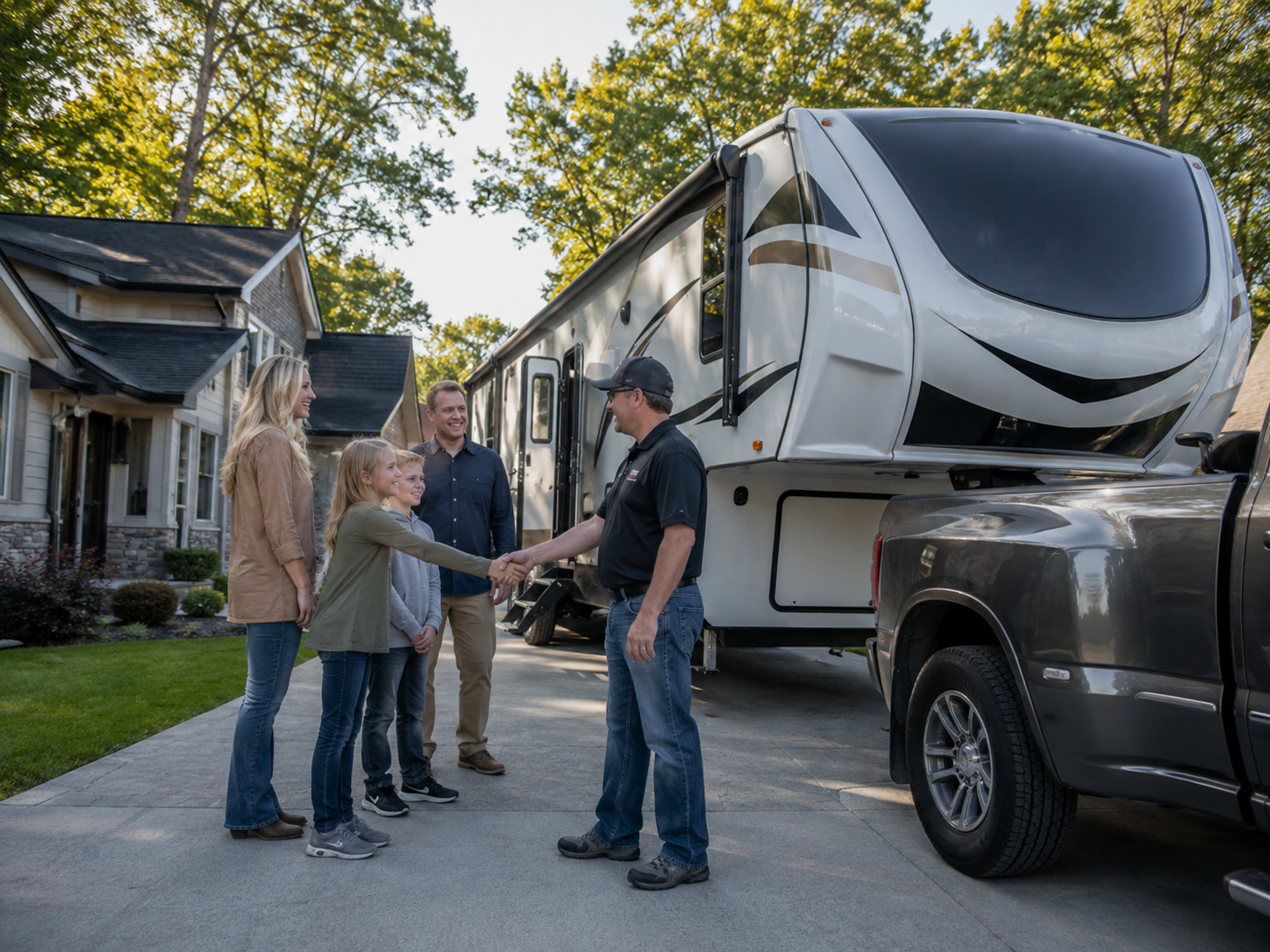
The single biggest shift in out-of-state RV buying over the past decade has been the rise of professional nationwide delivery services offered directly by dealerships. Rather than flying to another state, arranging a rental car, and driving an unfamiliar RV home yourself, a dealer's transport team hitches up the unit and brings it straight to your driveway, often within a week or two of purchase.
This removes the two biggest headaches of distance buying: the time commitment and the discomfort of towing or driving an RV you've never handled before, especially on unfamiliar highways. It also means you can complete a walkthrough via video call, sign paperwork remotely, and simply wait for delivery rather than building an entire multi-day trip around the pickup.
Handling Sales Tax and Registration
Sales tax rules vary significantly from state to state, and this is often the part buyers overlook until they're deep into the purchase. Generally, you pay sales tax based on your home state's rate at the time of registration, not the state where the dealership is located, so a lower-tax state selling you the RV doesn't necessarily mean you avoid your home state's tax rate entirely.
A reputable out-of-state dealer will walk you through exactly what paperwork you need for registration back home, including the manufacturer's certificate of origin, bill of sale, and any state-specific inspection requirements. Confirm this process upfront, since a dealer experienced in shipping units across state lines will have already handled this paperwork trail dozens of times before.

What to Ask an Out-of-State Dealer Before Buying
Ask directly whether the price you're quoted includes delivery, or if that's a separate line item added afterward, since some lower advertised prices don't reflect the full delivered cost. Confirm the exact delivery timeline, since transport schedules can shift a week or more depending on distance and the transport company's current workload.
Request a full video walkthrough of the specific unit, not just stock photos, so you can verify condition, options, and any cosmetic issues before it's loaded onto a truck. Ask what happens if an issue is discovered upon delivery, including how damage claims or defect disputes are handled once the unit has left the dealer's lot.
When Out-of-State Buying Makes the Most Sense
Out-of-state purchases pay off most clearly when you're searching for a specific floorplan or brand that simply isn't stocked within a reasonable driving distance of home. They also make sense when the price gap on a larger, higher-value unit like a fifth wheel or Class A motorhome is significant enough to comfortably absorb delivery costs and still come out ahead.
Buyers chasing end-of-season clearance pricing on remaining inventory from a previous model year often find the biggest savings sitting at dealers in different regions entirely, since inventory turnover timing varies by local demand.
When It Might Not Be Worth It
If your local dealer already carries the exact floorplan, brand, and trim level you want at a competitive price, the added complexity of an out-of-state purchase usually isn't worth the marginal savings. Smaller units with lower overall price tags also shrink the gap between potential savings and delivery costs, making the math less favorable the cheaper the RV itself is.
If you also want hands-on local service support immediately after your purchase, buying from a dealer with a nearby service center sometimes outweighs a modest price advantage found farther away.
Buying an RV from out of state isn't the gamble it used to be, especially now that established dealers offer door-to-door delivery, remote paperwork processing, and detailed video walkthroughs that make distance almost irrelevant to the actual buying experience.