

Lightweight Travel Trailers You Can Tow With an SUV — A Practical Buyer's Guide
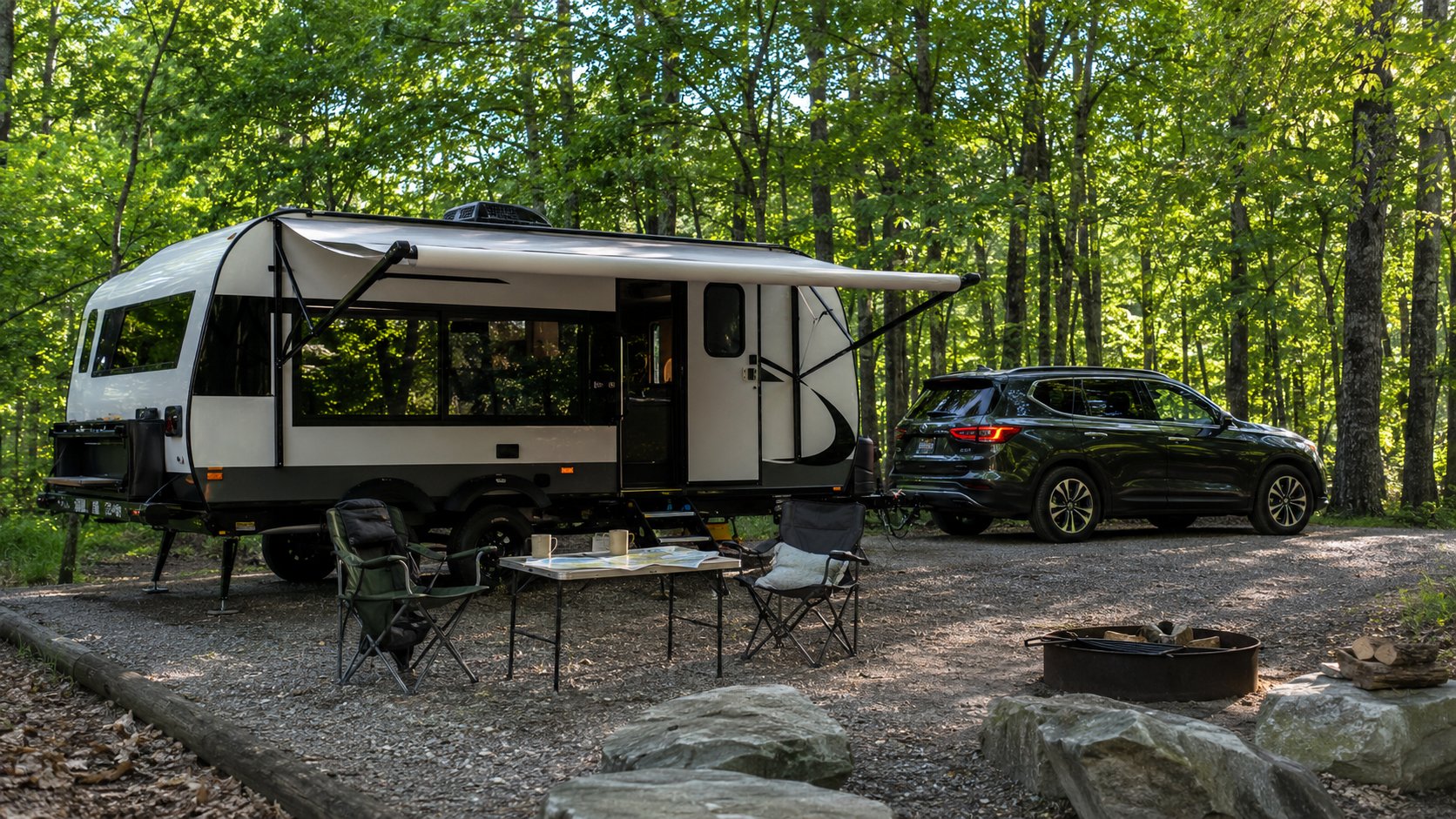
One of the most common misconceptions in the RV world is that you need a heavy-duty pickup truck to get into the lifestyle. You don't. A growing number of lightweight travel trailers are engineered specifically for the tens of millions of SUV owners on the road — and many of them are packed with far more features than their weight would suggest.
If you've been holding off on RV ownership because you drive an SUV, this guide is for you. Here's everything you need to know about lightweight travel trailers — how they're built, which ones suit which SUVs, and what to look for before you buy.
Why SUV Towing Is More Than Doable
The RV industry has responded directly to the surge in SUV ownership over the past decade. Manufacturers now build entire product lines — not just one or two models — specifically engineered to stay within SUV tow ratings. They use composite wall construction, aluminum frames, fiberglass exteriors, and aerodynamic profiles to keep weight down without stripping out the features buyers expect.
A well-spec'd mid-size SUV — think Toyota 4Runner, Ford Explorer, Jeep Grand Cherokee, Kia Telluride, or Honda Pilot — typically carries a tow rating between 5,000 and 6,500 lbs depending on configuration. That opens up a genuinely wide selection of full-featured travel trailers with real kitchens, real bathrooms, and real sleeping space for couples and small families alike. Even compact crossovers with tow ratings in the 3,500 lb range have solid options built for them.
The key is knowing your specific vehicle's tow rating before shopping — not the generic number for your model line, but the exact figure for your trim, engine, and tow package configuration. That number comes from your owner's manual or the manufacturer's towing guide. Get it first, then shop accordingly.
The Weight Numbers That Actually Matter
When evaluating any travel trailer for SUV towing, three numbers matter more than anything else listed on the spec sheet.
Dry Weight is the trailer's weight from the factory with no water, no gear, and no passengers. It's the number manufacturers advertise, and it's always the lightest the trailer will ever actually be. Factor in at least 10–15% more once you add water, food, clothing, and gear to get a realistic loaded estimate.
GVWR (Gross Vehicle Weight Rating) is the maximum allowable loaded weight of the trailer — water, gear, and all. This is the number your SUV's tow rating must exceed. Always leave a meaningful buffer here; running at the absolute edge of your tow rating puts strain on your transmission, brakes, and suspension in ways that add up fast over thousands of miles.
Tongue Weight is the downward force the trailer's hitch point places on your SUV's receiver. It should fall between 10–15% of the trailer's total loaded weight. Exceed your vehicle's tongue weight limit and you compromise steering, stability, and braking — regardless of whether the overall trailer weight is within spec. Many SUV owners overlook this number entirely and discover its importance the first time they take a highway on-ramp at speed.
What Makes a Travel Trailer "Lightweight"
Manufacturers build weight out of travel trailers through a combination of material choices and structural engineering — not by simply making units smaller or stripping out features.
Laminated fiberglass walls replace traditional wood-framed, vinyl-sided construction. They're lighter, more rigid, better insulated, and far more resistant to moisture intrusion over time. The Forest River Rockwood Geo Pro is a strong example of this approach — full composite wall construction, six-sided aluminum frame, and fully laminated fiberglass roof, all keeping dry weights under 3,000 lbs across most floor plans in the line.
Aluminum framing replaces steel where possible throughout the chassis and wall structure. The weight difference between an aluminum-framed trailer and a comparable steel-framed unit is significant — often several hundred pounds — without any meaningful loss in structural integrity when done correctly.
Aerodynamic profiles reduce wind resistance, which directly impacts not just fuel economy but towing stability. A boxy, tall trailer creates far more drag and sway than a low-profile, rounded-nose unit. For SUV towing — where power and stability reserves are tighter than in a full-size truck — aerodynamics matter more than most buyers initially realize.
Smaller fresh water tanks keep starting weight lower. Many SUV-friendly lightweight trailers carry 30–40 gallon fresh water tanks rather than the 60–80 gallon tanks found in larger units. For campground camping with hookups, this is irrelevant. For boondocking, it requires more planning around fill-ups.
Best Lightweight Travel Trailer Options for SUV Owners
Forest River Rockwood Geo Pro
The Geo Pro is arguably the benchmark for SUV-towable travel trailers. Multiple floor plans come in under 2,500 lbs dry weight — including the popular Geo Pro 19FBS, which Zoomers RV carries in inventory. Hitch weight on most configurations comes in under 300 lbs, making it compatible with a wide range of crossovers and mid-size SUVs. Inside, you get a full bath, a residential-style kitchen, real sleeping capacity, and serious construction quality. It's the trailer that consistently shows up on short lists for people who want a fully featured unit without a truck in the driveway.
Jayco Jay Feather
Jayco has built its Jay Feather line specifically around the SUV market. The Jay Feather Micro starts under 2,000 lbs dry — genuinely towable by properly equipped compact and mid-size SUVs — while larger Jay Feather models step up features and floor plan options while staying within mid-size SUV capacity. Jayco's construction quality and brand reputation make this a consistently strong recommendation for first-time buyers who want reliability from a major manufacturer. Zoomers RV carries Jayco inventory across their locations.
Keystone Coleman Light
Keystone's Coleman Light series deserves more attention than it typically gets. Models like the 17RX come in around 2,695 lbs dry with a 300 lb hitch weight — comfortably within reach of many everyday crossovers, including the Toyota Highlander, Ford Edge, Honda Passport, and even a properly equipped Subaru Outback. At roughly 7.5 feet wide, it fits standard campsites without issue and delivers a full-featured camping experience in a package most buyers don't expect at this weight class.
Grand Design Imagine
Grand Design's Imagine line has earned a strong reputation for build quality at an accessible weight. Several Imagine floor plans fall within SUV tow ratings and deliver Grand Design's hallmark fit and finish — better-than-average cabinetry, solid furniture, and attention to interior detail that shows the moment you step inside. For buyers who want a step up in quality without a step up in tow vehicle, Imagine is one of the first places to look. Grand Design is available through Zoomers RV.
Matching the Trailer to Your Specific SUV
Not every mid-size SUV tows the same. The same model in different trim levels can have tow ratings that vary by 1,000–2,000 lbs depending on engine, axle ratio, and tow package. Here's a practical way to think through it by SUV category.
Compact crossovers — Honda CR-V, Toyota RAV4, Subaru Forester — typically tow 1,500 to 3,500 lbs. This limits your options to the lightest end: teardrop trailers, pop-up campers, and the most compact ultra-lite travel trailers. Expect minimal amenities but genuine versatility.
Mid-size SUVs — Toyota Highlander, Ford Explorer, Jeep Grand Cherokee, Kia Telluride — typically tow 5,000 to 6,500 lbs depending on configuration. This is the sweet spot for SUV RV buyers. You can access a full range of lightweight travel trailers with real bathrooms, full kitchens, slide-outs, and sleeping for 4–6.
Full-size SUVs — Ford Expedition, Chevy Tahoe, Chevy Suburban, GMC Yukon — typically tow 7,500 to 9,300 lbs. Body-on-frame construction makes these the most capable SUV towers and opens up mid-weight travel trailers that overlap with light half-ton truck territory.
One critical note: unibody crossovers and SUVs handle towing differently from body-on-frame trucks and full-size SUVs. Even when tow ratings look comparable on paper, a body-on-frame vehicle with proper torque tends to deliver a more stable, confident tow experience than a unibody crossover at the same rating. If you're towing long distances frequently, this distinction matters.
What to Check Before You Sign
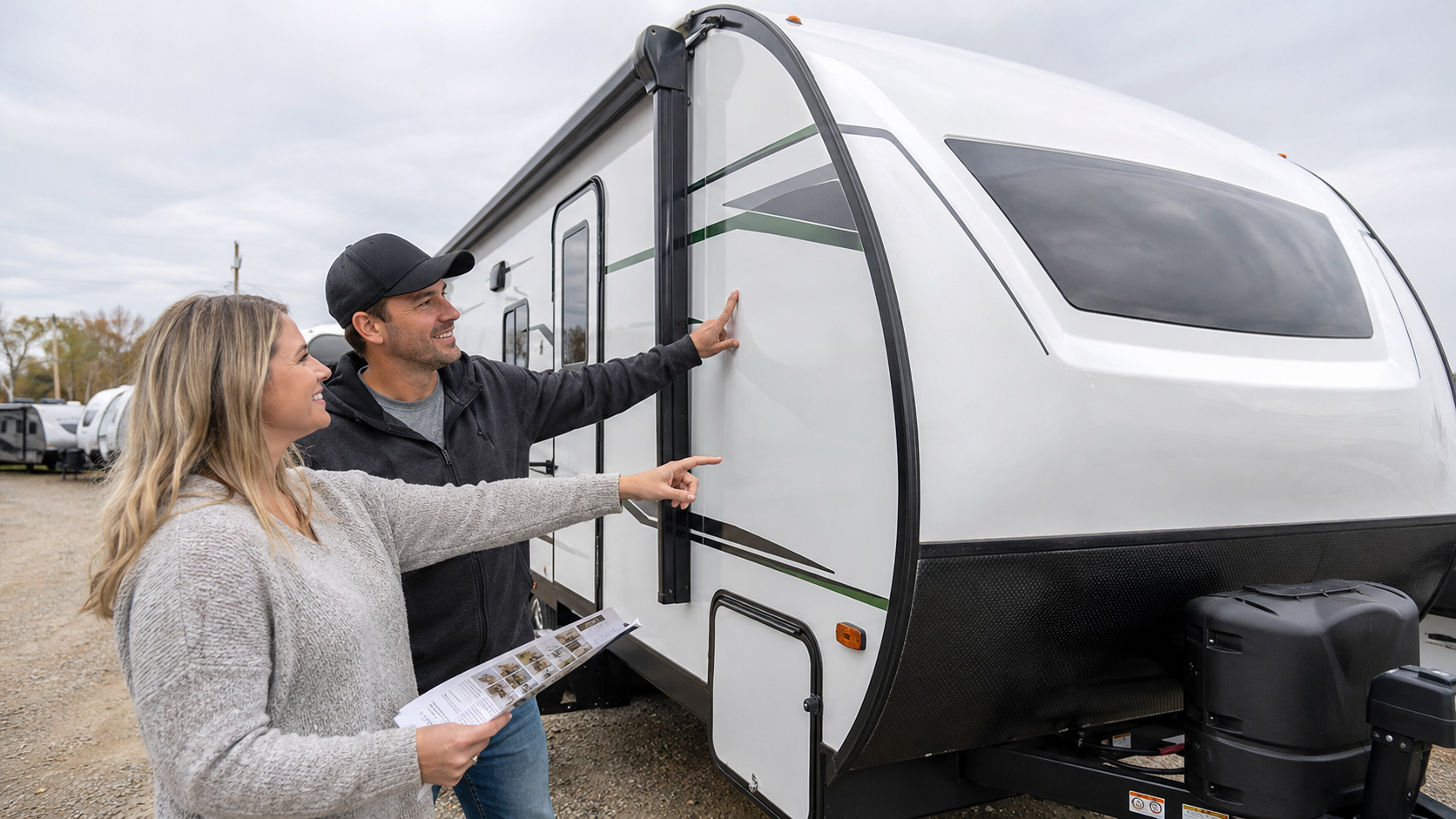
A few final checkboxes before any SUV-towable purchase:
Confirm your SUV has a factory tow package or aftermarket hitch rated for your trailer's tongue weight. A factory tow package typically includes a trailer wiring harness, upgraded transmission cooler, and a hitch receiver — not all SUVs come with this standard.
Check if your trailer requires a brake controller. Trailers above a certain weight threshold in most states legally require electric brakes — which means your SUV needs a compatible brake controller installed. This is an easy add-on but one to plan for.
Ask the dealer about sway control. Lightweight trailers are more susceptible to sway in crosswinds and when passed by large trucks. A weight distribution hitch with integrated sway control dramatically improves the experience on open highway.
Calculate your actual loaded weight. Dry weight is a starting point, not a towing plan. Add water, gear, clothing, food, and everything else you'll realistically carry, and make sure that loaded estimate stays comfortably under your vehicle's GVWR and tow rating.
Explore SUV-Towable Trailers at Zoomers RV
Zoomers RV carries one of the Midwest's strongest selections of lightweight travel trailers built specifically for SUV towing — including Forest River Rockwood Geo Pro, Jayco Jay Feather, Keystone Coleman Light, and Grand Design Imagine models across their Indiana and Illinois locations.
Our team in Wabash, IN knows the weight specs, the floor plans, and the tow vehicles inside out — and we'll match you to a trailer that fits your SUV's actual capacity, not just a generic recommendation. Browse our full travel trailer inventory online or visit us at 2503 E. State Rd. 524, Wabash, Indiana. Call us at (855) 263-0458 and let's get you on the road without trading in your SUV to do it.