
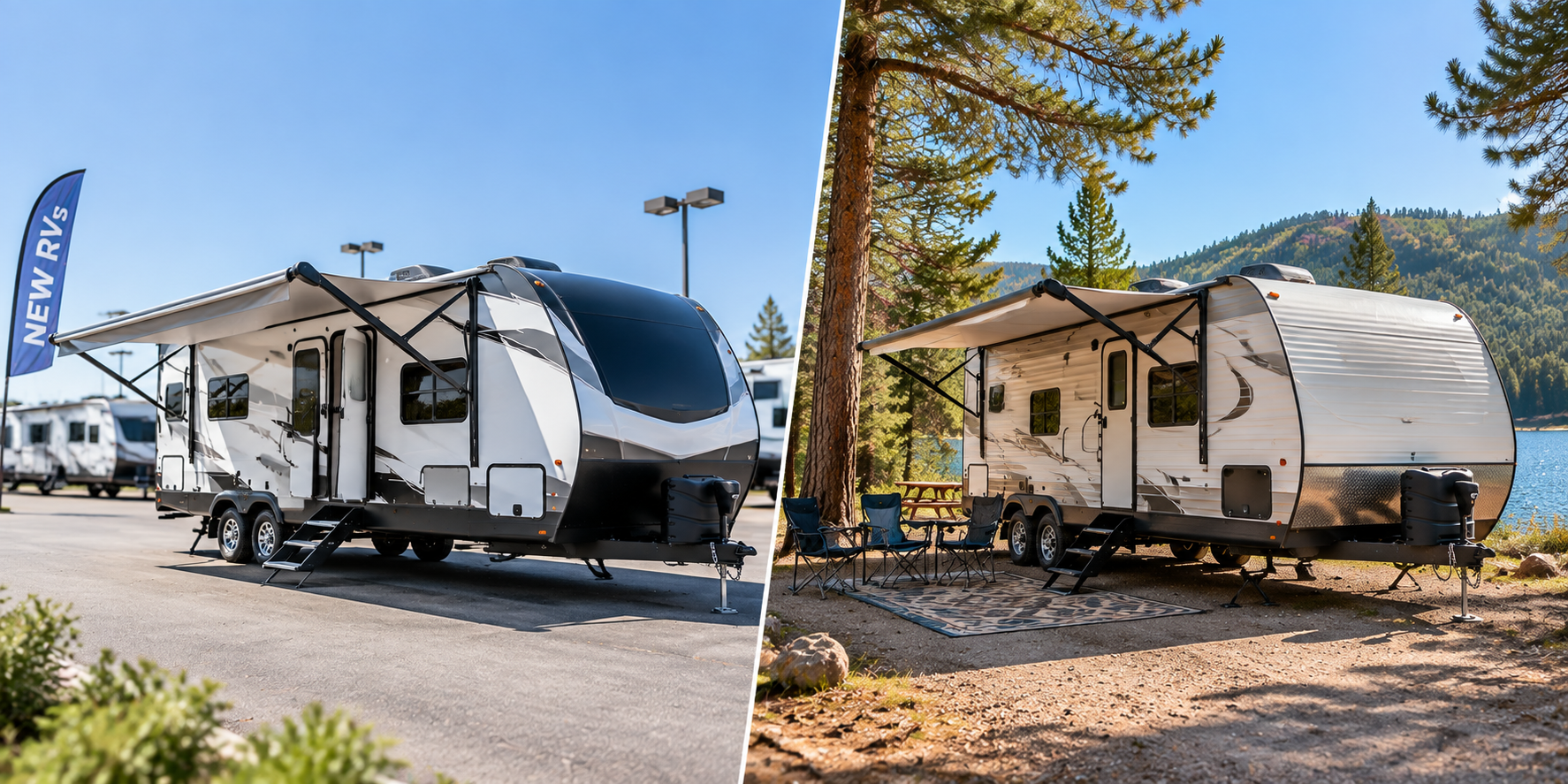
New vs used RV: which is the smarter buy?
New vs Used RV: Which Is the Smarter Buy?
There is no single answer to whether a new or used RV is the smarter buy, since it depends on your budget, how much depreciation risk you're willing to accept, and how much warranty coverage matters to you. A new RV offers the latest features, a full manufacturer warranty, and no unknown history, while a used RV offers a lower price point and avoids the steepest depreciation hit that happens in the first few years of ownership.
At Zoomers RV, this is one of the most common questions we walk through with shoppers, and the right answer really does change based on your priorities. Here's an honest breakdown of what you're actually weighing when you compare new versus used.
What Are the Real Differences Between a New and Used RV?
A new RV comes with a full manufacturer warranty, the latest floor plans and technology, and no prior wear, while a used RV has already absorbed its steepest depreciation and typically costs significantly less for a comparable floor plan and size. The tradeoff is that a used unit may carry unknown maintenance history and won't have the newest features or updated systems found in current model years.
Here's what separates the two in practical terms:
New RVs include full manufacturer and dealership warranty coverage, typically ranging from one to several years depending on the component
New RVs reflect the latest floor plan designs, appliance technology, and safety features from the manufacturer's current lineup
Used RVs have already taken the biggest depreciation hit, since RVs typically lose 20 percent or more of their value in the first year alone
Used RVs may come with add-ons already installed, such as solar panels, awnings, or upgraded suspension, saving money compared to adding them yourself
Used RVs carry some unknown history unless documentation and service records are available, which makes a thorough inspection more important
How Much Money Can You Actually Save Buying Used?
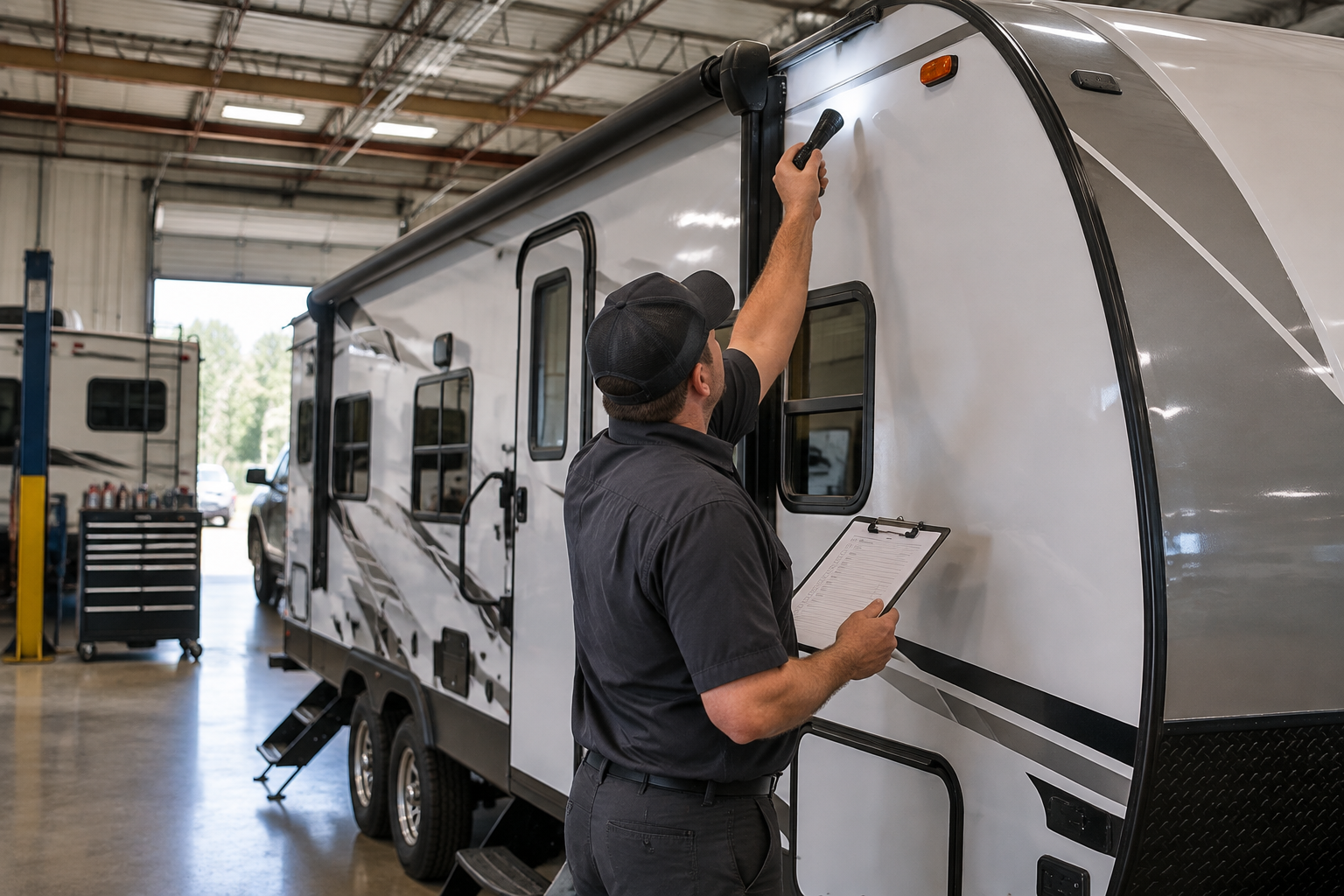
Buyers can typically save 20 to 40 percent or more on a used RV compared to the price of an equivalent new model, with the exact savings depending on the unit's age, condition, and how well it was maintained. RVs depreciate faster than most vehicles in the first few years, which means a three to five year old unit often represents the best combination of savings and remaining usable life.
The steepest depreciation happens early:
A new RV can lose 20 to 30 percent of its value in the first year, similar to driving a new car off the lot
Depreciation slows down significantly after the three to five year mark, which is why many buyers target this age range for used purchases
Well-maintained units with documented service history hold value better than units with unclear maintenance records
Certain brands and floor plans hold resale value better than others, so researching a specific model's depreciation curve is worth the time before buying
If your main goal is stretching your budget as far as possible, a used RV in the three to seven year range often delivers the best value, assuming it passes a thorough inspection and has service records to back up its condition.
Which Option Is Better for Your Specific Situation?
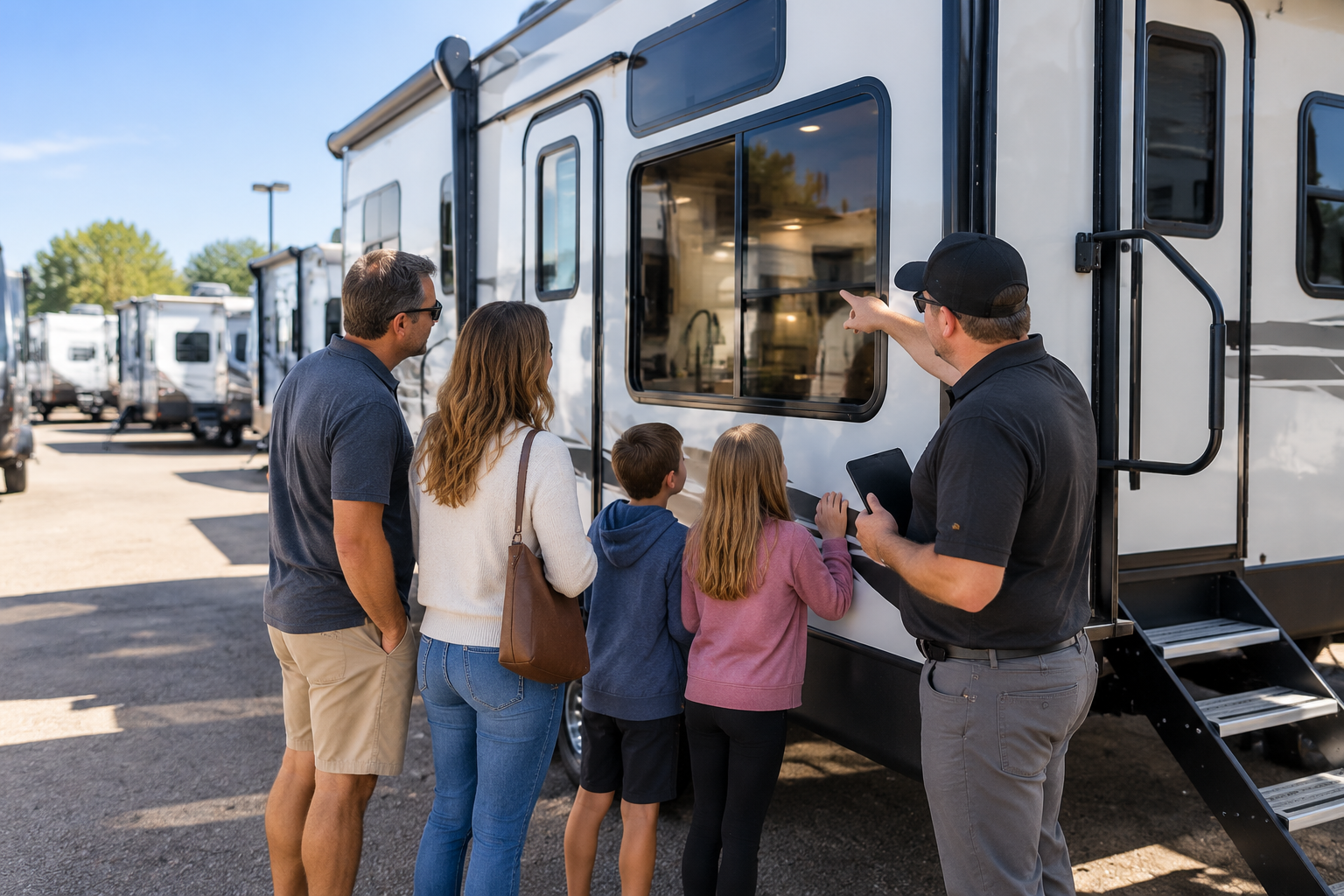
The better choice between new and used depends on how much risk you're comfortable with, whether warranty coverage matters to you, and how particular you are about having the newest features. Neither option is universally smarter. It comes down to matching the purchase to your priorities and how you plan to use the RV.
Is a New RV Worth the Extra Cost?
A new RV is worth the extra cost if you want full warranty protection, the latest technology and floor plans, and complete peace of mind about the unit's history. First-time buyers in particular often value knowing exactly what they're getting, without the guesswork of inspecting someone else's maintenance habits.
New RVs make the most sense for buyers who:
Want manufacturer and dealership warranty coverage during the years when major systems are most likely to have issues
Plan to keep the RV for many years and want to spread the higher upfront cost over a longer ownership period
Prefer the newest technology, including updated kitchen appliances, entertainment systems, and safety features
Don't want to deal with inspecting or troubleshooting unknown wear from a previous owner
Is a Used RV the Smarter Financial Choice?
A used RV is the smarter financial choice if you want to avoid the steepest depreciation, are comfortable with a thorough inspection process, and don't need the absolute newest features. Buyers on a tighter budget, or those who plan to upgrade again in a few years, often get more value out of a used unit since they're not paying for depreciation they won't recoup anyway.
Used RVs make sense for buyers who:
Want to maximize space and features for their budget rather than paying a premium for "new" status
Are comfortable having a unit professionally inspected before purchase
Plan to use the RV moderately rather than putting extreme mileage or heavy use on it right away
Don't mind a slightly older floor plan or technology set in exchange for meaningful savings
Zoomers RV carries both new RVs and used RVs, so you can compare specific units side by side rather than deciding in the abstract. Looking at real listings, including mileage, age, and condition notes, usually makes the decision clearer than weighing the categories in general terms.
What Mistakes Do Buyers Make When Choosing Between New and Used?
The most common mistakes are assuming used always means cheaper in the long run, skipping a professional inspection on a used unit, and not accounting for the full cost of financing a new RV over its loan term. These mistakes often show up months or years after the purchase, not during the buying process itself.
Specific mistakes we see often:
Buying a used RV without a professional inspection, then discovering roof leaks, water damage, or appliance issues after the sale
Assuming a used RV's lower price tag means lower total cost, without factoring in potential repair costs for aging systems
Financing a new RV over a very long loan term without considering how depreciation will outpace the loan balance in the early years
Skipping a review of maintenance records on a used unit, which makes it much harder to judge how well previous owners cared for it
Choosing based on price alone without considering how warranty coverage affects your total cost if something breaks in the first few years
A pre-purchase inspection, whether you're buying new or used, is one of the best ways to avoid unpleasant surprises. For new units, this means a thorough walkthrough with a sales expert covering every system. For used units, it means checking for water damage, testing all appliances, and reviewing service history whenever it's available.
How Zoomers RV Helps You Decide Between New and Used
Zoomers RV works with buyers across our service area who are weighing new against used, and our team walks through the tradeoffs honestly rather than pushing toward whichever option carries a bigger price tag. We can compare specific new and used units side by side so you see exactly what you're getting for the price difference.
Our financing team can structure a loan for either a new or used purchase based on your budget, and our service department can perform a pre-purchase inspection on a used unit so you know its condition before you commit. If you already own an RV and are considering trading up, our trade-in program can apply your current unit's value toward either a new or used purchase.
Shoppers near Wabash, Fort Wayne, and Kokomo in Indiana, along with buyers from Carbondale and Marion in Illinois and Creston and Osceola in Iowa, can visit one of our locations to compare new and used units in person before making a decision.
Frequently Asked Questions
Is it better to buy a new or used RV for a first-time owner?
Many first-time owners benefit from a used RV in good condition, since it allows them to learn what they actually want in an RV without the full financial commitment of a new unit. Others prefer new units for the warranty protection and peace of mind, especially if they're unfamiliar with inspecting RV systems themselves.
How old should a used RV be to get the best value?
RVs in the three to seven year age range often represent the best value, since the steepest depreciation has already occurred but the unit likely still has many years of usable life left. The exact sweet spot depends on the specific brand, model, and how well the unit was maintained.
Do used RVs come with any warranty coverage?
Some used RVs still have remaining manufacturer warranty if they're recent enough, and many dealerships offer extended service plans or limited warranties on used units they've inspected and certified. Always ask specifically what coverage, if any, transfers with a used purchase.
What should you inspect before buying a used RV?
Key areas to inspect include the roof and seals for water damage, all major appliances for proper function, the frame and tires for wear, and the plumbing and electrical systems for leaks or faults. A professional pre-purchase inspection is strongly recommended, since some issues like slow water intrusion aren't visible during a casual walkthrough.
Does a new RV lose value faster than a used RV?
Yes, a new RV typically loses value faster in percentage terms during its first few years, since it experiences the steepest depreciation curve similar to a new car. A used RV that has already passed that early depreciation period tends to lose value more slowly going forward.
Can you negotiate the price on both new and used RVs?
Yes, pricing on both new and used RVs is often negotiable, though the room to negotiate can vary based on demand for the specific model, time of year, and how long a unit has been in inventory. It's worth asking about current promotions or seasonal pricing on both new and used units before finalizing a purchase.
Final Takeaway
Deciding between a new and used RV comes down to matching the purchase to your budget, your comfort with inspecting a unit's history, and how much you value warranty protection versus upfront savings. Neither option is automatically smarter. A new RV offers peace of mind and the latest features, while a used RV offers meaningful savings once the steepest depreciation has already passed.
If you're weighing new against used, the team at Zoomers RV can walk you through specific units side by side so you can compare real pricing, condition, and features. Contact us or stop by one of our locations to start comparing your options in person.