
What Is a Destination Trailer? Seasonal Camping Guide
If your idea of camping means spending most of the summer at the same campground, lake, resort, or wooded retreat, a destination trailer may be a better fit than a traditional travel trailer.
Destination trailers are designed for campers who want more living space and residential-style comfort without giving up the flexibility of a towable RV. They are especially popular with seasonal campers who set up their RV for several weeks or months at a time.
So, what exactly is a destination trailer, and is it worth buying for a seasonal campsite? Here is what you should know before making a decision.
What Is a Destination Trailer?
A destination trailer is a large towable RV built primarily for extended stays at one campsite rather than frequent travel between campgrounds.
It still has wheels, axles, a hitch, plumbing, electrical systems, holding tanks, and many of the same components found in a travel trailer. The biggest difference is how the RV is designed to be used.
Instead of focusing heavily on lightweight construction and easy towing, destination trailers prioritize interior space, residential features, storage, and comfort.
Many destination trailers are around 40 feet long or more. Because of their size and weight, owners often tow them to a seasonal campsite, fully set them up, and leave them there for most of the camping season.
Common Features in Destination Trailers
Depending on the manufacturer and floorplan, a destination trailer may include:
Large slide-outs
Tall residential-style ceilings
Sliding patio-style entry doors
Full-size or residential refrigerators
Kitchen islands
Large pantries
Freestanding dining tables
Fireplaces
Theater seating
King or queen beds
Loft sleeping areas
Bunk rooms
Spacious bathrooms
Extensive wardrobe and cabinet storage
Washer and dryer preparation on select models
These features can make a destination trailer feel much closer to a small vacation home than a conventional camper.
How Is a Destination Trailer Different From a Travel Trailer?
The main difference between a destination trailer and a traditional travel trailer is mobility versus long-term comfort.
A traditional travel trailer is generally designed for campers who expect to move frequently. You might spend a weekend at one campground, tow it somewhere else the following month, and take several trips during the year.
A destination trailer can still be moved, but frequent towing is usually not its strongest advantage.
Because destination trailers are larger and heavier, they are best suited to people who plan to remain at one campsite for an extended period.
Travel trailers are typically easier to tow, easier to maneuver into smaller campsites, and available in a wider range of lengths and weights.
Destination trailers, on the other hand, tend to offer more interior space, larger kitchens, taller ceilings, bigger bedrooms, and more residential-style amenities.
If your priority is exploring a different destination every few weekends, a standard travel trailer may be more practical.
If your priority is turning one campsite into a comfortable home base for the season, a destination trailer deserves serious consideration.
Why Destination Trailers Are Great for Seasonal Campsites
More Living Space for Longer Stays
A smaller camper can be perfectly comfortable for a weekend getaway.
However, once you start spending several weeks or months at the same campsite, additional space becomes much more valuable.
Destination trailers often provide larger living rooms, wider kitchens, more storage, and better separation between sleeping and living areas.
That extra room can make a significant difference for families, couples working remotely, or anyone spending most of the summer at the campground.
Residential-Style Kitchens Make Daily Living Easier
Cooking in an RV kitchen for a weekend is very different from preparing meals there throughout an entire season.
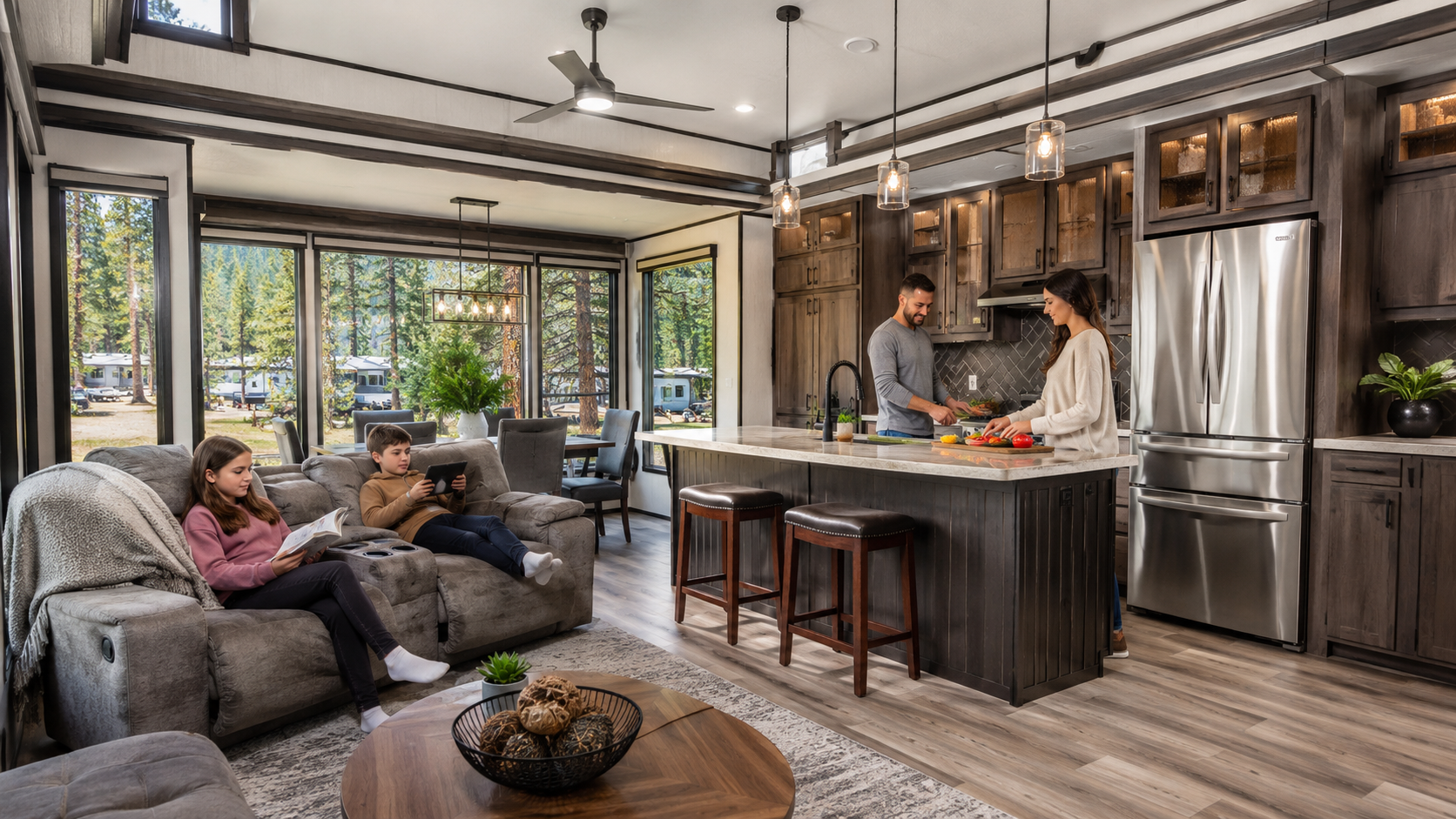
Destination trailers often provide larger refrigerators, more countertop space, expanded cabinetry, kitchen islands, deep sinks, and residential-style appliances.
For seasonal campers who prefer cooking at their campsite rather than eating out regularly, these features can make everyday life much easier.
A Seasonal Campsite Can Feel More Like a Vacation Home
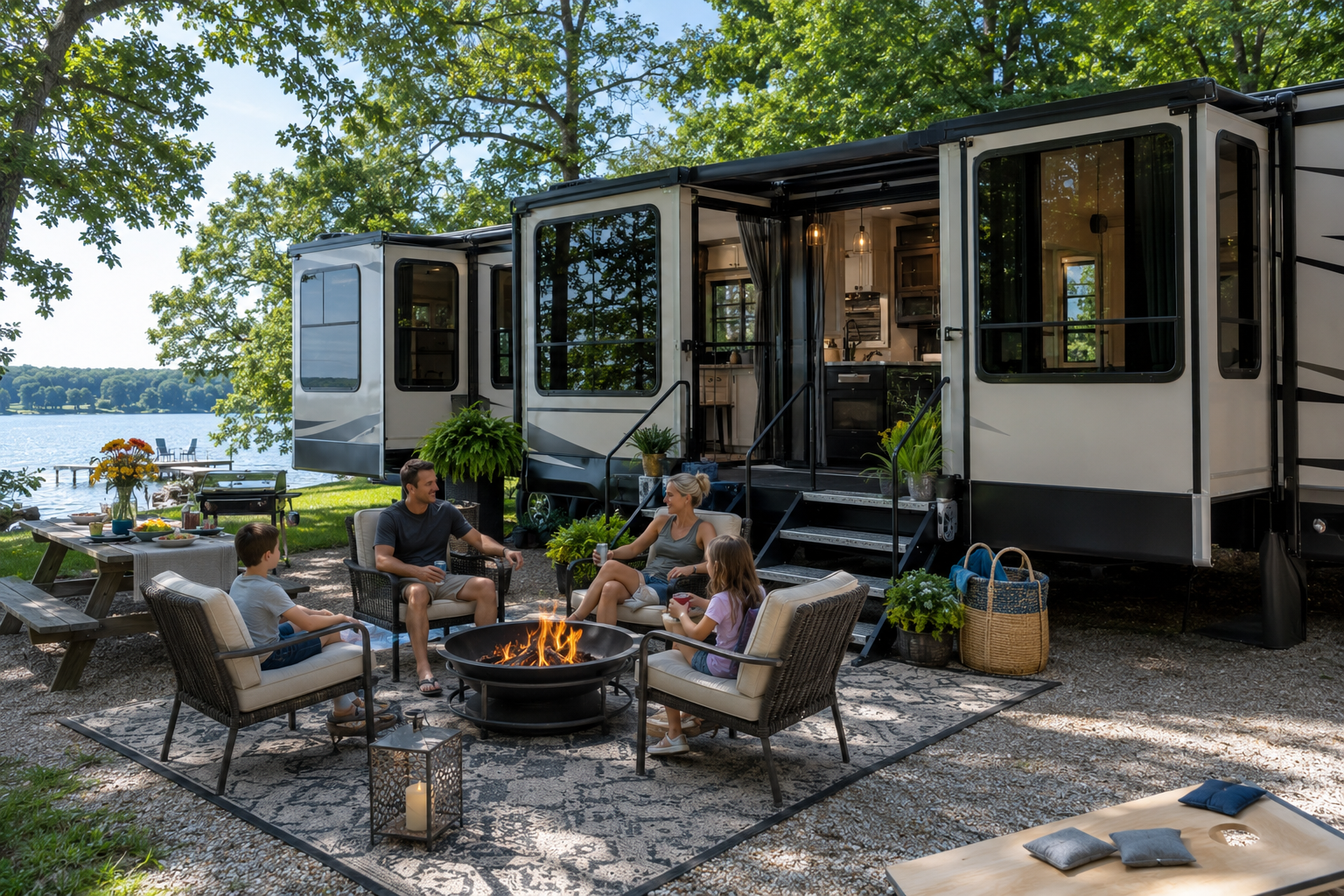
Many seasonal campers create a complete outdoor living space around their RV.
You may add:
Patio furniture
Outdoor rugs
Grills
Storage boxes
Bicycles
Fire pits
Outdoor dining areas
Decks where campground rules allow them
A destination trailer works especially well with this type of setup because the RV is not constantly being packed up and moved.
You can settle into the site and create a more permanent-feeling summer retreat.
Destination Trailers Can Work Well for Families
Families often benefit from destination trailer floorplans because they provide more options for privacy and sleeping space.
Some destination trailers include lofts that give children or guests their own sleeping area without using the main living room.
Others may include dedicated bunk rooms, multiple bathrooms, large wardrobes, or separate bedrooms.
For families spending an entire summer at the same campground, having separate sleeping and living areas can make the RV much more comfortable over time.
Models such as the Forest River Salem Grand Villa, CrossRoads Hampton, Keystone Residence, Forest River Sierra, and Jayco Jay Flight Bungalow are examples of destination-style RVs that seasonal campers may want to compare.
Are There Any Downsides to a Destination Trailer?
Destination trailers offer plenty of advantages, but they are not the right choice for every camper.
They Are Large and Heavy
Destination trailers are usually much heavier than smaller travel trailers.
That means towing one requires an appropriately rated tow vehicle. In many cases, seasonal campers arrange professional delivery because they only expect the trailer to be moved occasionally.
Before towing any destination trailer, always confirm the trailer's weight ratings and the towing capacity of your specific vehicle.
They Are Less Convenient for Frequent Travel
If your camping plans involve visiting multiple campgrounds throughout the season, a destination trailer may feel cumbersome.
Its larger size can make towing, parking, maneuvering, and setup more involved than with a smaller travel trailer.
Campers who enjoy road trips and frequently changing destinations may be happier with a travel trailer or fifth wheel designed for regular towing.
Not Every Campsite Can Accommodate One
Before buying a destination trailer for a seasonal campsite, confirm that the campground can handle the size of the RV.
Ask about:
Maximum RV length
Site width
Slide-out clearance
Electrical hookups
Water connections
Sewer availability
Parking requirements
Deck or patio rules
Seasonal storage policies
Do not assume that every seasonal site can accommodate a 40-foot or larger trailer.
Measuring the campsite before shopping can save you from choosing a floorplan that simply will not fit.
Destination Trailers Still Require Maintenance
A destination trailer may stay parked for months, but it still requires routine maintenance.
Important maintenance areas include:
Roof inspections
Exterior seals
Slide-out mechanisms
Plumbing systems
Water heaters
Batteries
Propane systems
Appliances
Air conditioning
Winterization
Long-term campsite use can actually make preventive maintenance especially important because the RV remains exposed to sunlight, rain, temperature changes, and other weather conditions throughout the season.
Zoomers RV offers RV service for maintenance and repairs, including seasonal preparation and systems that are particularly important for long-term campsite use.
Is a Destination Trailer Worth It?
For many seasonal campers, a destination trailer is absolutely worth considering.
It is especially well suited to you if:
You already have a seasonal campsite.
You plan to remain at one campground for several weeks or months.
Interior space matters more than easy towing.
You want residential-style amenities.
You regularly camp with children or guests.
You need more storage than a smaller travel trailer provides.
You want your campsite to feel more like a vacation home.
A destination trailer may not be the best choice if you only camp a few weekends each year or prefer moving between destinations frequently.
The value comes from actually using the additional space and residential features over extended stays.
What Should You Look for When Buying a Destination Trailer?
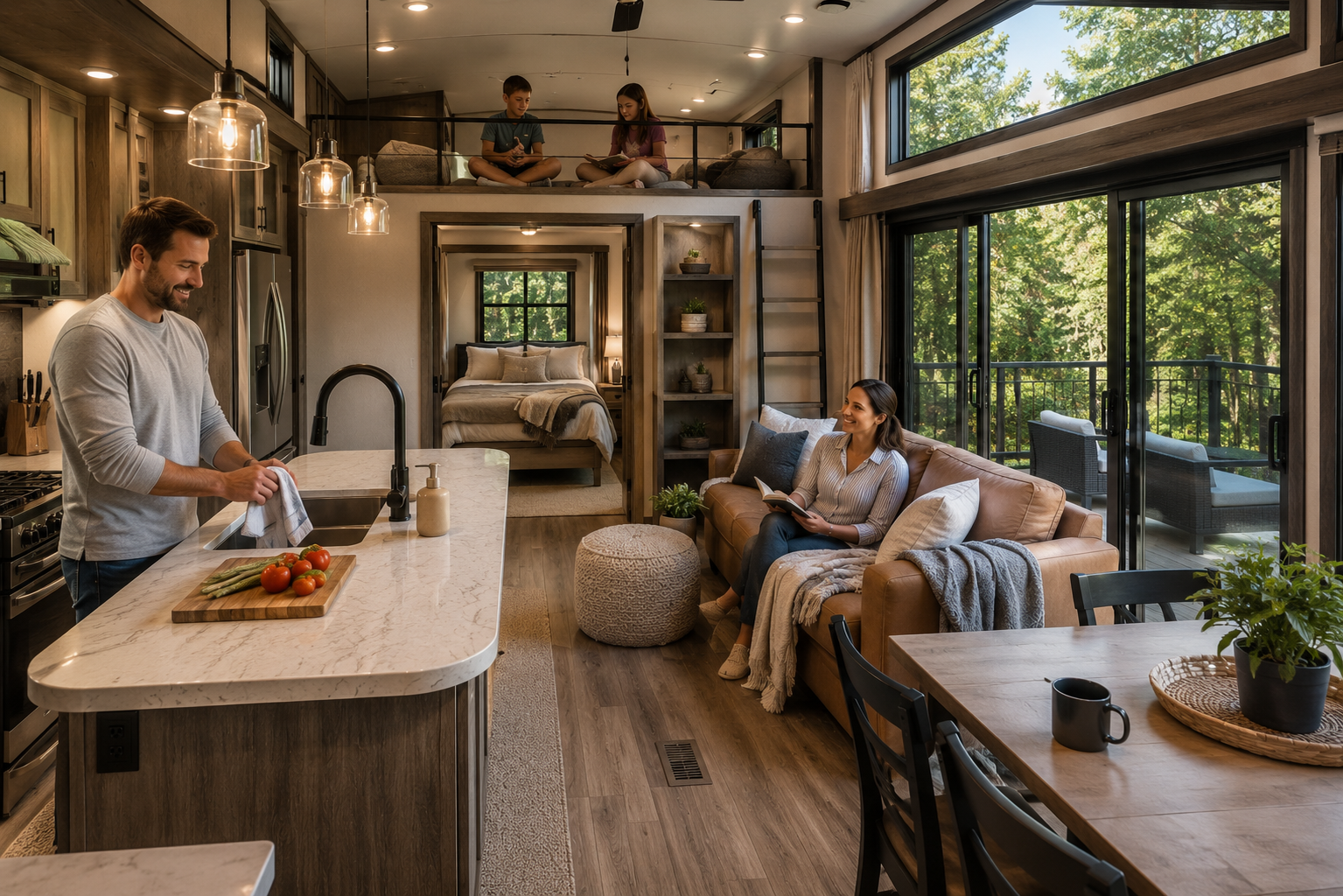
Start with the floorplan rather than simply choosing the longest trailer available.
The right layout depends heavily on how you plan to use your seasonal campsite.
For Couples
Couples may prefer destination trailers with:
Large rear living rooms
Theater seating
Kitchen islands
Spacious master bedrooms
King-bed options
Large wardrobes
Freestanding dining areas
These layouts can provide plenty of comfort without sacrificing living space for extra bunk rooms.
For Families
Families should consider:
Loft sleeping areas
Dedicated bunk rooms
Multiple sleeping zones
Larger refrigerators
Big pantries
Extra bathrooms
More wardrobe storage
Having separate areas for adults and children can make extended camping much more enjoyable.
For Campers Who Like to Entertain
If friends or extended family regularly visit your campsite, consider layouts with:
Large open living rooms
Patio-style doors
Multiple seating areas
Spacious kitchens
Freestanding dining tables
Large entertainment centers
These features make it easier for your destination trailer to become the central gathering place at your seasonal site.
Should You Buy a Destination Trailer for a Seasonal Campsite?
A destination trailer makes the most sense when you care more about enjoying the destination than constantly moving between destinations.
You still get the flexibility of a towable RV, but the layout is designed around settling in.
Larger kitchens, spacious living areas, extra storage, taller ceilings, multiple slide-outs, lofts, and residential-style bedrooms can make spending an entire season at one campground much more comfortable.
Before purchasing, confirm your campsite dimensions, campground restrictions, electrical requirements, towing or delivery plans, and preferred floorplan.
If your goal is to create a comfortable seasonal retreat where you can spend weeks or months at a time, a destination trailer can be one of the best RV types to consider.
Frequently Asked Questions
Can You Travel With a Destination Trailer?
Yes. Destination trailers are towable RVs, but they are generally better suited to occasional relocation than frequent road trips.
Their larger size and heavier weight can make regular towing less convenient than with a traditional travel trailer.
Can You Live in a Destination Trailer All Summer?
Yes. Extended seasonal stays are one of the main reasons people choose destination trailers.
Their larger kitchens, bedrooms, bathrooms, storage areas, and living spaces make them much more comfortable for longer stays than many smaller campers.
Are Destination Trailers Good for Families?
Yes. Many destination trailers offer excellent family-friendly floorplans.
Look for models with lofts, bunk rooms, extra bathrooms, large refrigerators, and separate sleeping areas if you plan to camp with children.
Do You Need a Truck to Move a Destination Trailer?
If you plan to tow the trailer yourself, you will need a properly rated tow vehicle capable of handling its loaded weight.
Some owners choose professional RV transport or dealership delivery because their destination trailer remains at the same campsite for most of the year.
Is a Destination Trailer Better Than a Travel Trailer?
It depends on how you camp.
A destination trailer is usually better for extended stays at one campsite, while a traditional travel trailer is generally better for campers who tow frequently and visit many different destinations.