
What Is a Toy Hauler and What Can You Haul in It?
What Is a Toy Hauler and What Can You Haul in It?
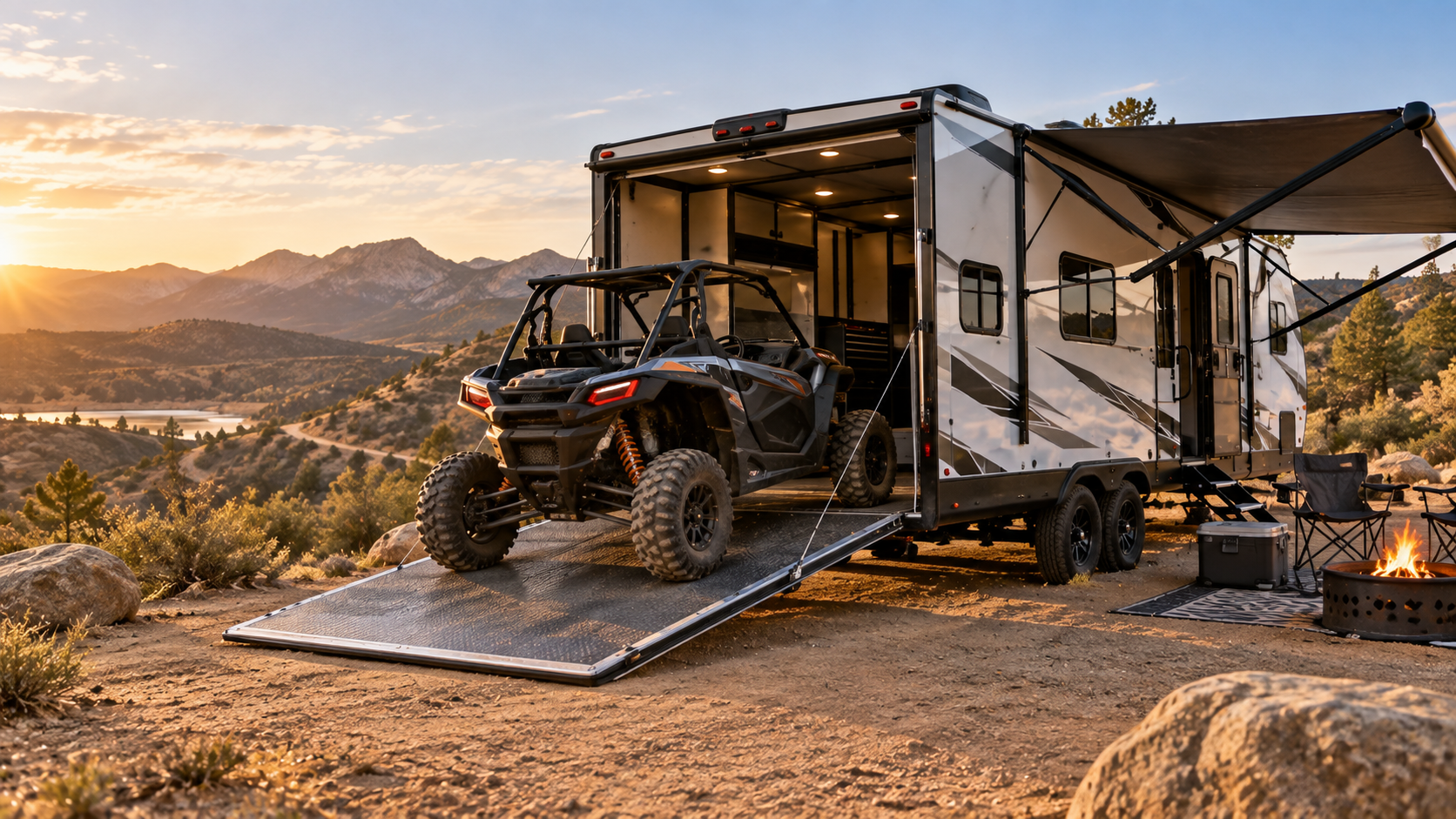
A toy hauler is a type of RV that includes a built-in garage space, usually at the rear, designed to carry motorcycles, ATVs, UTVs, golf carts, kayaks, or other outdoor gear while still providing full living quarters. The garage area typically features a fold-down rear ramp door, tie-down points, and reinforced flooring built to handle the weight of loaded equipment.
Toy haulers have become one of the most popular RV categories for people who want to combine camping with off-road riding, water sports, or hauling large gear. At Zoomers RV, this is one of the questions we field most often from customers who ride, boat, or just need more cargo capacity than a standard travel trailer or fifth wheel offers.
What Exactly Is a Toy Hauler RV?
A toy hauler is an RV, either a travel trailer, fifth wheel, or motorhome, built with a dedicated garage compartment separate from the main living area. This garage is typically accessed through a rear ramp door that doubles as a loading ramp and, once parked, can fold down to extend the living space outdoors.
The garage space usually includes:
A reinforced floor rated for heavier loads than standard RV flooring
D-ring tie-downs anchored into the floor and walls to secure cargo
A fresh water tank and rinse station for cleaning off gear after a ride
Fold-down or removable furniture that converts the garage into extra sleeping space when it's not loaded with equipment
A separate 12-volt or generator-powered electrical setup to run lights and accessories in the garage independent of the main living area
Unlike a standard travel trailer or fifth wheel, where every square foot goes toward living space, a toy hauler dedicates a portion of the floor plan specifically to hauling. That tradeoff means slightly less living area for a similar length unit, but it solves a real problem for owners who don't want to tow a separate trailer behind their RV.
What Can You Actually Haul in a Toy Hauler?
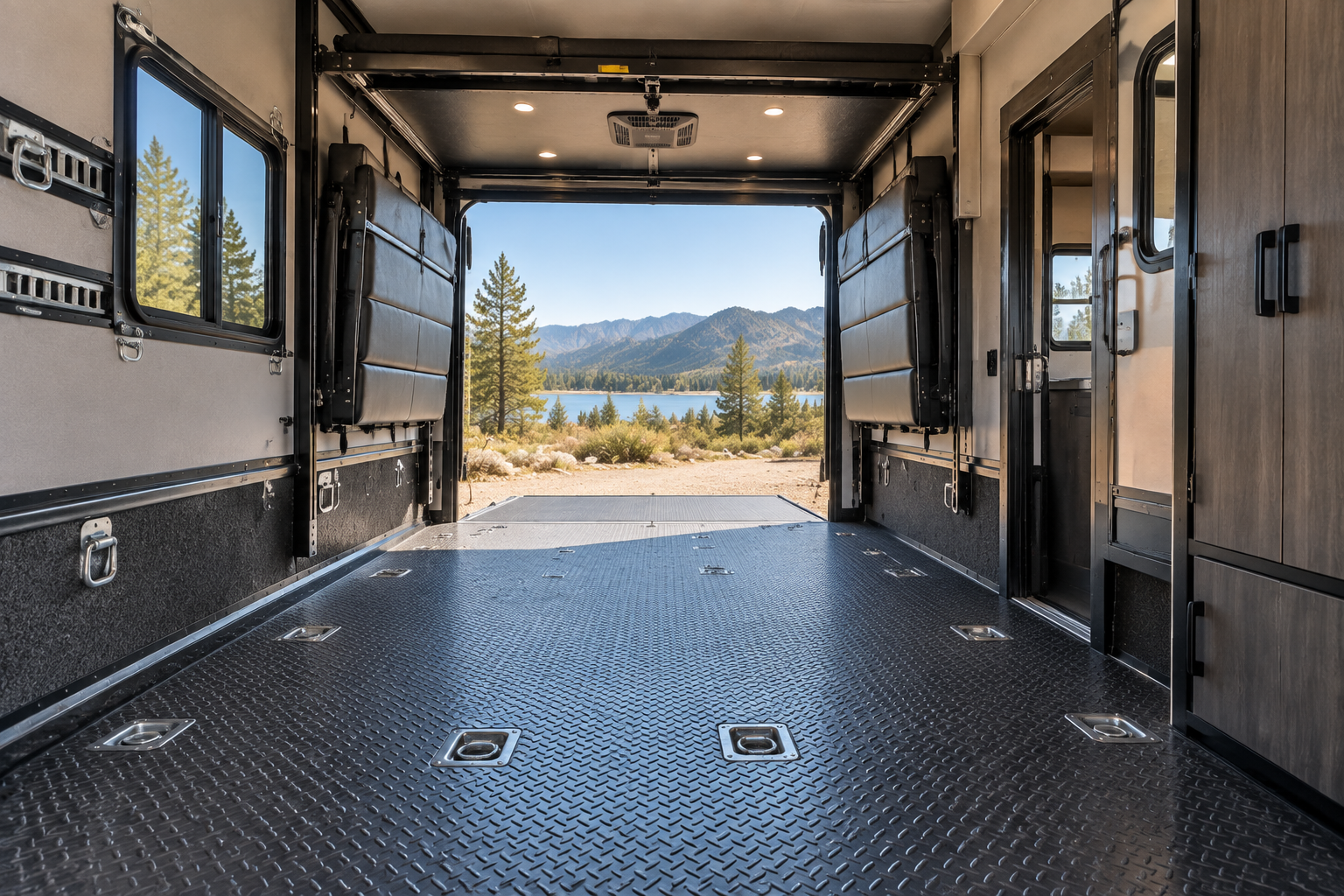
You can haul motorcycles, ATVs, UTVs, side-by-sides, golf carts, dirt bikes, kayaks, bicycles, and general outdoor gear in a toy hauler garage, as long as the combined weight stays within the unit's rated cargo capacity. Most garages are built specifically with powersports equipment in mind, but plenty of owners use the space for non-motorized gear too.
Common items owners load into a toy hauler garage include:
Motorcycles and dirt bikes
ATVs and UTVs, including full-size side-by-sides in larger units
Golf carts
Kayaks, canoes, and paddleboards
Bicycles and e-bikes
Camping gear, coolers, and folding furniture
Small utility items like generators or portable grills
The specific weight and size capacity varies significantly by model. A compact travel trailer toy hauler might handle one ATV or a couple of dirt bikes, while a larger toy hauler fifth wheel can carry a full-size UTV or even a small car in some heavy-duty models. Before loading anything, check the manufacturer's cargo carrying capacity (CCC) and garage floor weight rating, since exceeding either can affect handling, tire wear, and safety while towing.
If you're shopping and already know what you plan to haul, it helps to measure your equipment's length, width, and height against the garage's interior dimensions before buying. A UTV that fits width-wise might still be too tall for the ramp door opening on some smaller units.
How Do You Choose the Right Toy Hauler for Your Needs?
The right toy hauler depends on what you're hauling, how many people are traveling, and whether you need a travel trailer, fifth wheel, or motorized toy hauler. Matching the garage size and floor plan to your actual gear and travel style prevents the most common buyer regret, which is choosing a unit that's either too small for equipment or too large to tow comfortably.
What Is the Difference Between a Travel Trailer Toy Hauler and a Fifth Wheel Toy Hauler?
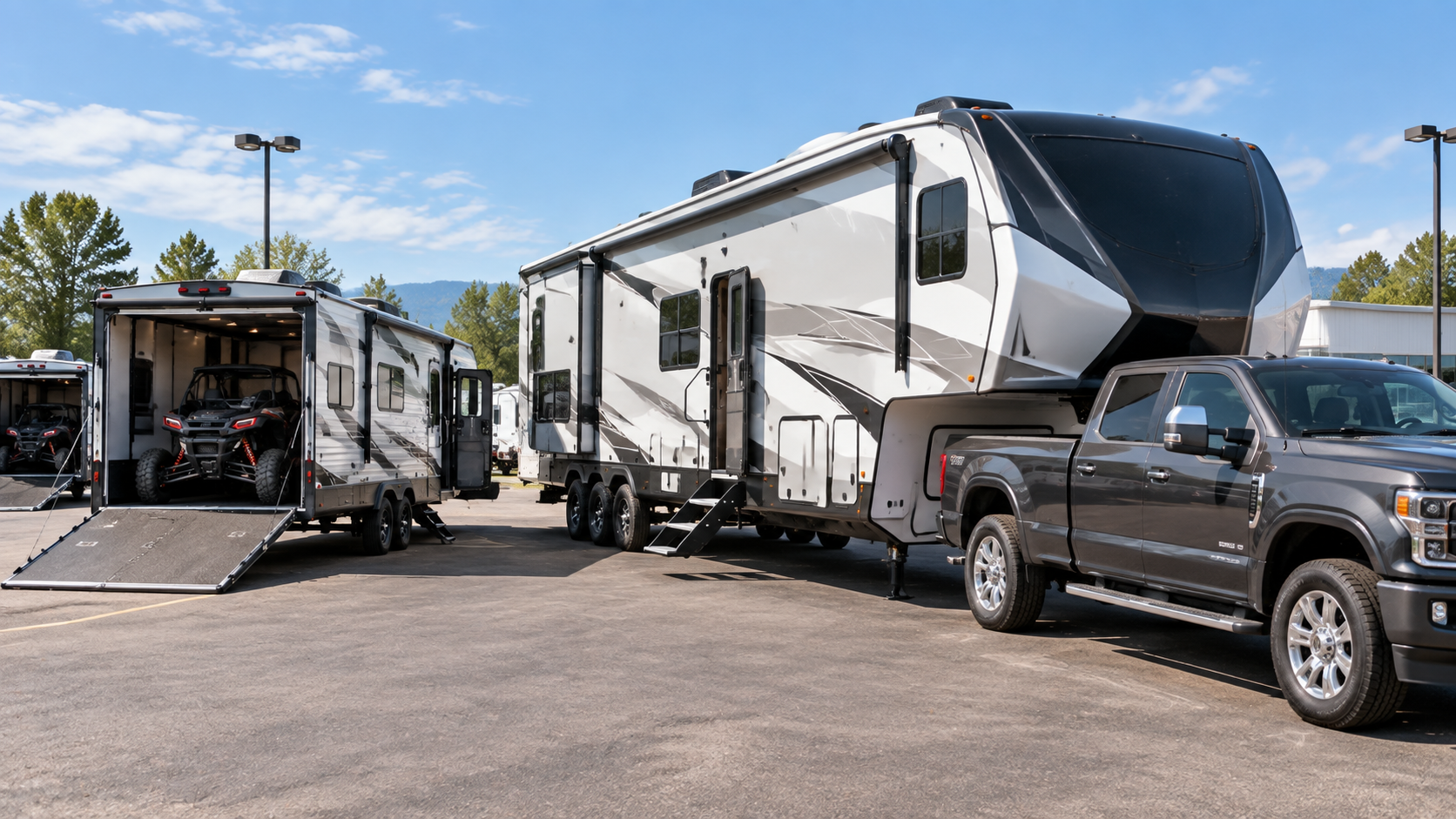
A travel trailer toy hauler connects to a standard bumper hitch or weight-distribution hitch and tends to be lighter and more affordable, while a fifth wheel toy hauler connects to a hitch mounted in a truck bed and typically offers more garage and living space. Fifth wheel toy haulers also tend to tow more stably at highway speeds because of how the hitch distributes weight over the tow vehicle's rear axle.
Here's how to think about the choice:
Travel trailer toy haulers work well for smaller gear loads, tighter budgets, and owners who already have a capable tow vehicle without a truck bed for a fifth wheel hitch
Fifth wheel toy haulers suit larger families, bigger equipment like full-size UTVs, and owners who want more separation between the living area and the garage
Motorized toy haulers, built on a motorhome chassis, eliminate towing entirely but come with a higher price point and different maintenance needs
What Should You Consider Before Buying a Toy Hauler?
Before buying, measure your equipment, confirm your tow vehicle's towing capacity, and think through how often the garage will actually convert into extra living or sleeping space. These three factors determine whether a specific floor plan will work for your lifestyle, not just for one trip but for years of ownership.
A practical checklist:
Measure the length, width, and height of everything you plan to haul
Confirm the toy hauler's garage floor weight rating against your equipment's combined weight
Check your truck's towing capacity against the toy hauler's loaded weight, not just the dry weight
Decide how often you'll convert the garage into a bunk or lounge area versus keeping it loaded
Look at fresh water and holding tank sizes if you plan to rinse off gear regularly after use
Zoomers RV carries a range of toy haulers, including both new and used models, so you can compare garage sizes and floor plans side by side before deciding what fits your equipment and towing setup.
What Are Common Mistakes Buyers Make With Toy Haulers?
The most common mistakes are underestimating loaded weight, buying a garage too small for future equipment upgrades, and overlooking how the ramp door design affects loading angle and ground clearance. These issues usually surface after the purchase, when an owner realizes their gear doesn't fit the way they expected.
Specific mistakes we see regularly:
Calculating only the dry weight of the RV and forgetting to add fuel, water, gear, and passengers, which can push a loaded trailer well past the tow vehicle's rated capacity
Buying a garage sized for current equipment without room to upgrade to a larger ATV or UTV later
Not checking ramp door angle and ground clearance, which matters if you're loading low-clearance vehicles like sport bikes
Skipping a walkthrough of the tie-down system, then discovering the garage lacks enough anchor points for multiple items
Overlooking how much living space is lost when the garage stays loaded full-time, leaving less room for sleeping or storage
Taking equipment measurements to a dealership walkthrough and physically checking fit against the garage dimensions is the simplest way to avoid most of these problems before signing on a unit.
How Zoomers RV Helps You Find the Right Toy Hauler
Zoomers RV works with riders, off-road enthusiasts, and families across our service area who need a toy hauler that actually fits their equipment, not just a floor plan that looks good on paper. Our team walks through garage dimensions, tie-down setups, and weight ratings with every customer so you know exactly what a specific model can handle before you buy.
We also help with financing that fits your budget, and our service department can handle ongoing maintenance on both the RV systems and the garage hardware like ramp door hinges and tie-down anchors. If you're upgrading from a smaller toy hauler or trading in a standard travel trailer, our trade-in program makes the switch easier.
Customers near Wabash, Fort Wayne, and Kokomo in Indiana, along with shoppers from Carbondale and Marion in Illinois and Creston and Osceola in Iowa, can visit one of our locations to see toy hauler garages in person and test the fit with their own gear.
Frequently Asked Questions
How much weight can a toy hauler garage hold?
Garage weight capacity varies by model, typically ranging from around 1,500 pounds in smaller travel trailer toy haulers to well over 5,000 pounds in heavy-duty fifth wheel models built for full-size UTVs or small cars. Always check the specific manufacturer's cargo rating rather than assuming based on overall RV size.
Can you live in the garage area of a toy hauler full-time?
Yes, most toy hauler garages include fold-down beds, tables, or seating that convert the space into a functional living or sleeping area when it's not loaded with equipment. This flexibility is one of the main reasons toy haulers appeal to full-time travelers who don't always have gear loaded.
Do toy haulers have lower fuel economy or towing performance than regular RVs?
Toy haulers are generally heavier than comparable travel trailers or fifth wheels without a garage, which can reduce fuel economy for the tow vehicle and require a higher towing capacity. The exact impact depends on the specific model, the tow vehicle, and how much equipment is loaded in the garage at the time.
What size truck do you need to tow a toy hauler?
The required tow vehicle depends on the toy hauler's gross vehicle weight rating (GVWR) once loaded with gear, water, and supplies, which is almost always higher than the advertised dry weight. Most fifth wheel toy haulers require a heavy-duty pickup with a diesel or larger gas engine, while lighter travel trailer toy haulers can often be towed by a half-ton truck.
Are toy haulers good for families who don't own powersports equipment?
Yes, many families use the garage space for extra sleeping quarters, bicycle and kayak storage, or simply as additional cargo room for camping gear, without ever hauling motorized equipment. The flexible garage layout works well for any family that needs more storage and living flexibility than a standard floor plan provides.
What is the difference between a toy hauler and a cargo trailer?
A toy hauler includes full RV living amenities like a kitchen, bathroom, and sleeping areas alongside the garage space, while a cargo trailer is built purely for hauling equipment with no living quarters. Toy haulers cost more but let you camp and haul gear in a single unit, while cargo trailers are typically paired with a separate camper or used strictly for transport.
Final Takeaway
A toy hauler solves a specific problem: getting your motorcycles, ATVs, UTVs, or other gear to the campsite without towing a separate trailer, all while still having a full living space to camp in once you arrive. Choosing the right one comes down to measuring your equipment, understanding weight ratings, and matching the garage size and floor plan to how you actually plan to use it.
If you're ready to compare toy hauler floor plans or want help figuring out which model fits your truck and your gear, the team at Zoomers RV can walk you through garage dimensions, towing requirements, and financing options in person. Contact us or stop by one of our locations to see our current toy hauler lineup up close.