

Best Class C Motorhomes for Families
Class C motorhomes hit a sweet spot that families gravitate toward again and again: enough space for kids and gear, a familiar cab-forward driving position, and a price point that doesn't require a second mortgage. If you're comparing motorhome classes for a family trip, here's what actually matters when narrowing down your options.
Why Class C Works So Well for Families
Built on a van or truck chassis with a distinctive cab-over section, Class C motorhomes give you a familiar driving experience closer to a large van or truck than the bus-like feel of a Class A. That matters for parents who haven't driven anything larger than an SUV, since the shorter learning curve gets everyone on the road faster with less anxiety behind the wheel.
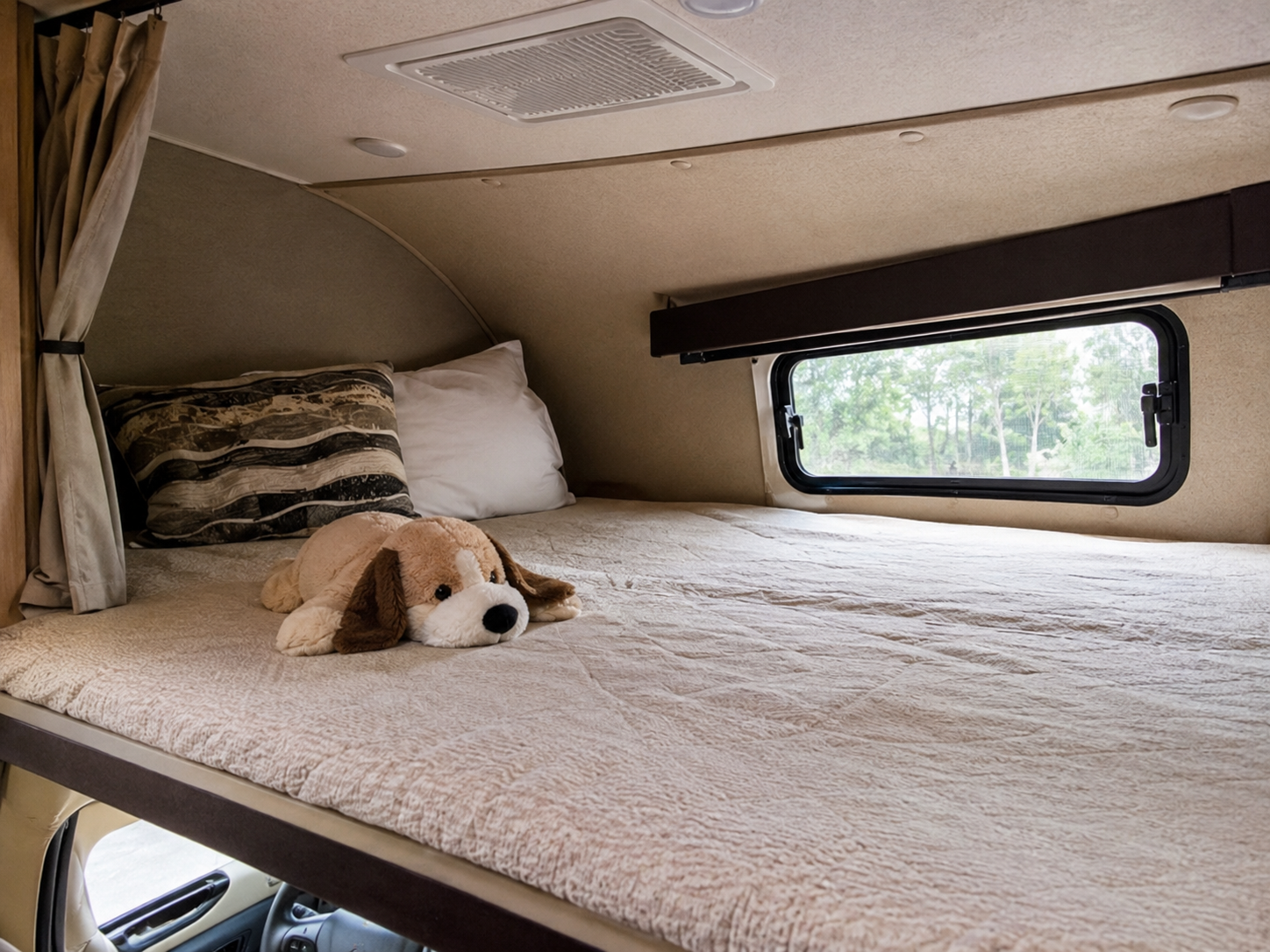
The cab-over area above the driver's cab typically houses a full bed or bunk space, which adds sleeping capacity without stealing floor space from the main living area. That single design feature is often the deciding factor for families choosing Class C over a Class B camper van, which lacks the room entirely.

What to Look for in a Family Class C Motorhome
The best family Class C motorhomes offer bunk beds or a convertible dinette for kids, a separate master bedroom for parents, at least one full bathroom, and enough length (typically 28 to 32 feet) to comfortably sleep 6 to 8 people.
Sleeping capacity — look for a cab-over bed, bunk room, and convertible dinette to maximize the number of sleeping spots without cramming everyone into one space
Separate zones for parents and kids — a rear or side master bedroom that closes off from the main living area gives parents privacy once kids are asleep
Bathroom layout — a full bath with a separate shower stall matters more on longer trips than a cramped wet bath
Storage capacity — exterior pass-through storage for bikes, coolers, and outdoor gear keeps clutter out of the living space
Kitchen functionality — a full-size refrigerator and enough counter space to prep real meals reduces restaurant costs on multi-day trips
Slide-outs — even one slide-out dramatically increases usable floor space once parked at a campsite
Length and Layout Considerations
Families with younger kids often do well with a 28 to 30-foot Class C, which is easier to maneuver into campground sites and still offers a cab-over bunk plus a rear bedroom. Larger families or those planning extended trips tend to size up to 31 to 34 feet for a dedicated bunk room with two or three beds stacked separately from the cab-over space.
Bunk-house floorplans, where a rear room holds two or three fixed bunks instead of a single cab-over bed, have become one of the most requested layouts for families with multiple children, since each kid gets a defined sleeping spot rather than sharing a fold-out.
Drivability: A Real Advantage Over Class A
Class C motorhomes are typically built on a Ford, Chevrolet, or Mercedes Sprinter chassis, which keeps the driving dynamics closer to a large truck than a commercial bus platform. Shorter overall length compared to most Class A units also makes fitting into standard campground pull-through sites and gas stations considerably less stressful for a first-time motorhome driver.
Affordability Without Sacrificing Space
Class C motorhomes generally carry a lower price point than comparable Class A units while still delivering family-friendly floorplans, which makes them the most accessible entry into motorized RV ownership for budget-conscious families. That affordability gap widens further when shopping used inventory, where a well-maintained pre-owned Class C can deliver the same bunk-room layout at a meaningfully lower cost than a new unit.
Real-World Example
A family of five taking two annual road trips might find a 30-foot Class C with a cab-over bunk and rear master bedroom covers their needs without the parking and fuel costs of a 35-foot Class A. The shorter length also means fewer headaches finding campsites during peak summer months, when longer rigs often get turned away from tighter or older campground loops.
Questions to Ask Before Buying
How many people need dedicated sleeping spots, and does the floorplan match that number comfortably?
Is the bathroom a full bath with separate shower, or a combined wet bath?
What's the chassis, and does it have a strong reliability track record for the mileage we expect to drive?
Does the floorplan include a slide-out, and how much extra floor space does it add once parked?
What's the realistic price difference between a comparable new and used unit?
Class C motorhomes earn their reputation as the family-friendly choice by balancing driveability, sleeping capacity, and price in a way that Class A and Class B units simply can't match for most households taking their first steps into motorhome travel.