

How to Store Your RV Through a Cold Midwest Winter
A Midwest winter doesn't just bring cold, it brings the freeze-thaw cycles, heavy snow loads, and moisture swings that cause the most damage to an unprepared RV. Storing your rig correctly from October through spring is the difference between rolling out in April ready to camp and discovering burst pipes, mildew, or a chewed-up interior instead.
Featured Snippet Answer: To store an RV through a cold Midwest winter, drain and winterize all water systems with RV antifreeze, disconnect and store the battery in a warm location, seal exterior gaps against rodents, and choose covered or indoor storage whenever possible to protect against snow load and moisture damage.
Choose the Right Storage Location First
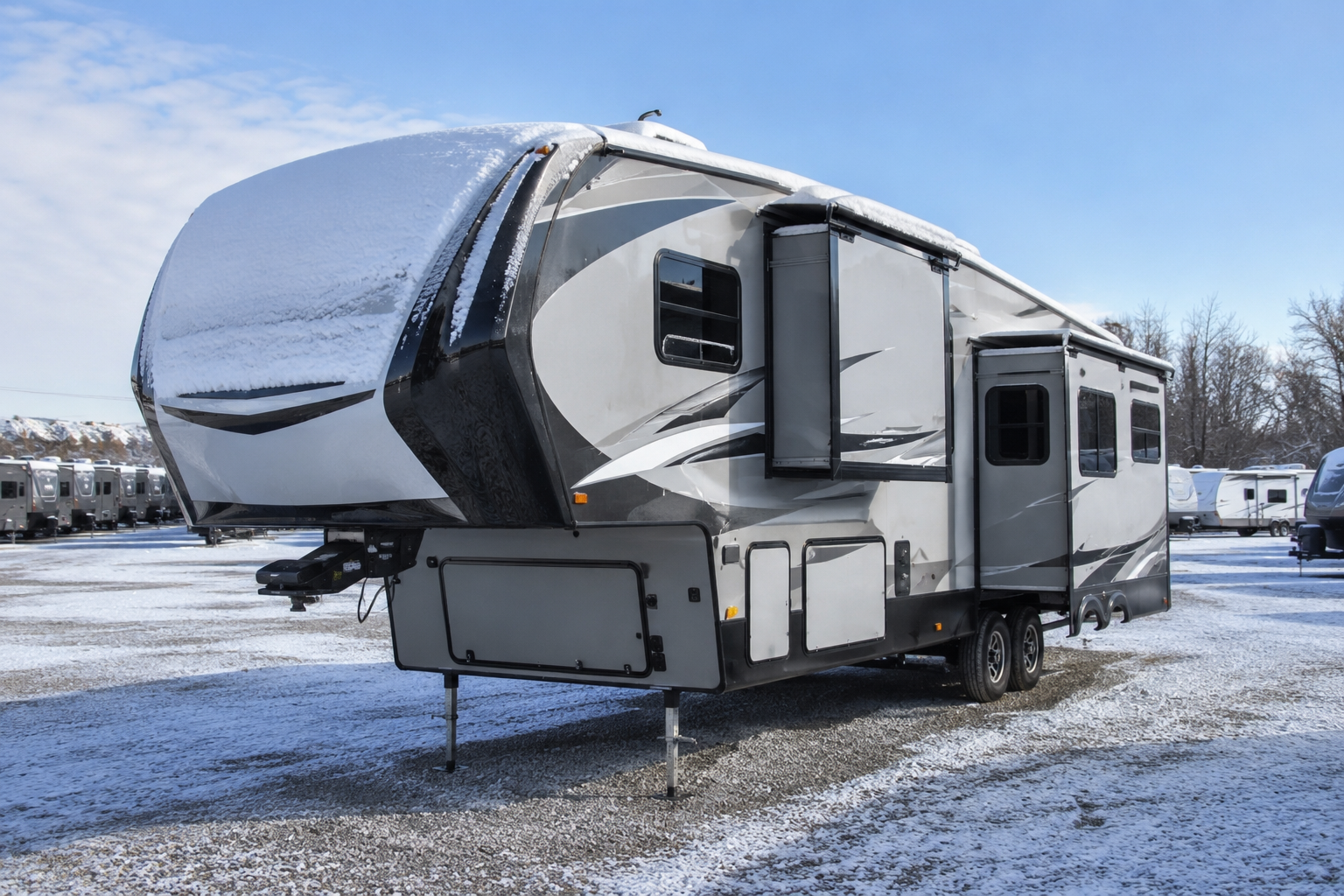
Indoor storage inside a heated or unheated building offers the best overall protection, shielding your RV from snow accumulation, UV damage, and the freeze-thaw cycling that stresses seals and seams over months of sitting. If indoor storage isn't available or affordable, a covered carport is the next best option, keeping snow load off the roof while still allowing airflow underneath.
Outdoor storage without any cover works too, but it demands more diligence throughout the season, including regularly brushing snow off the roof before it accumulates into ice that can stress seams and roof vents. Whichever option you choose, park on gravel or pavement rather than grass, since ground moisture wicks up into tires and undercarriage components parked directly on wet turf all winter.
Winterize the Plumbing System Completely
Freezing water inside your RV's plumbing is the single most damaging thing that can happen during Midwest storage, since ice expansion cracks pipes, fittings, and the water heater itself. Drain the fresh water tank, water heater, and low-point drains completely, then run non-toxic RV antifreeze through every faucet, the toilet, and the shower until it flows from each fixture.
Never substitute automotive antifreeze for RV-specific antifreeze, since the automotive version is toxic and unsafe for a system connected to your drinking water lines. Bypass the water heater tank before running antifreeze through, since filling a full water heater with antifreeze wastes several gallons unnecessarily.
Protect the Battery From Extreme Cold
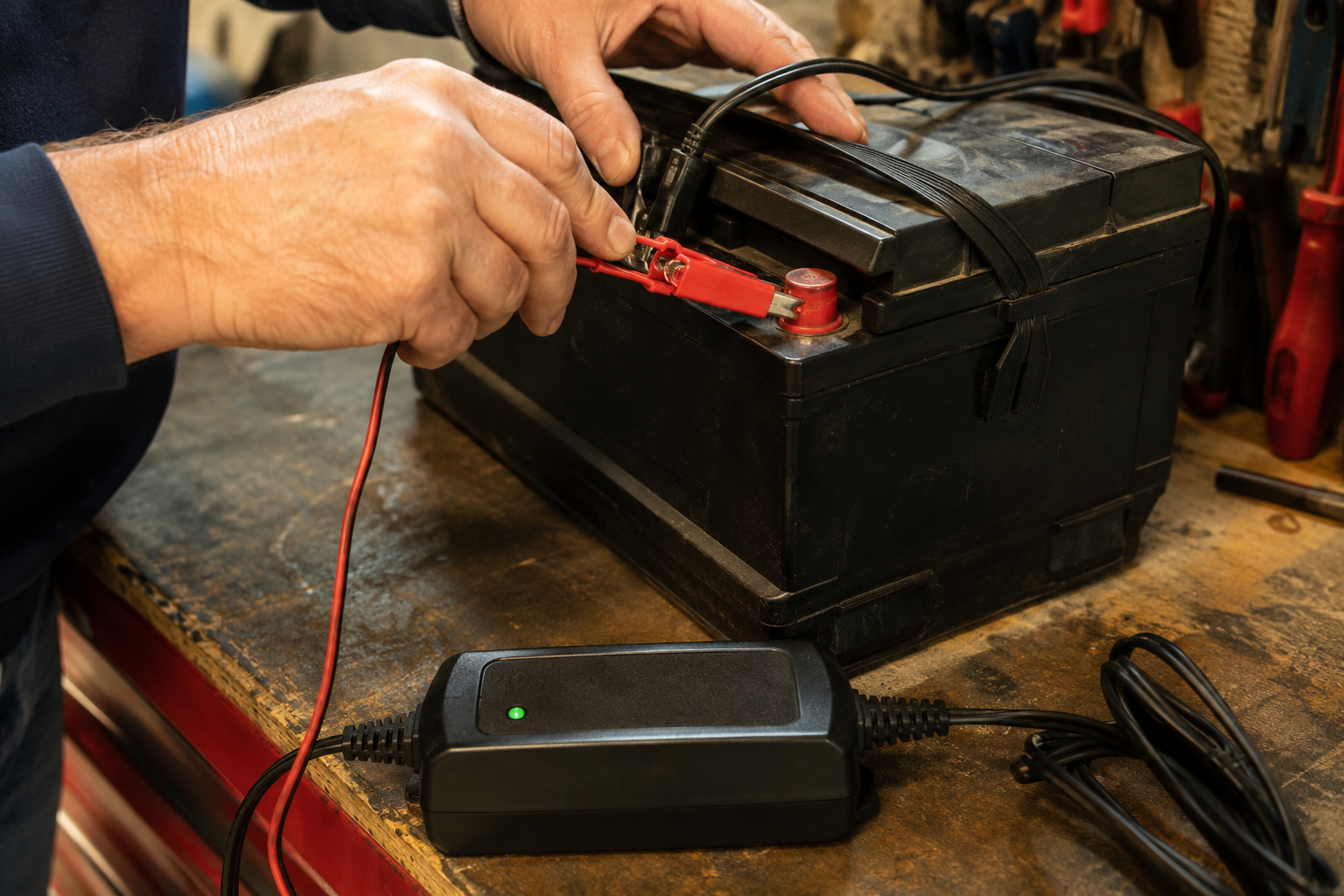
Cold temperatures drain and damage batteries faster than almost anything else in RV storage, especially if a battery sits at a low charge through repeated freeze cycles. Disconnect the battery entirely and store it somewhere temperature-controlled, like a garage or basement, connected to a battery maintainer or trickle charger that keeps it topped off without overcharging.
If removing the battery isn't practical, at minimum disconnect it from the RV's electrical system to stop any parasitic drain from clocks, alarms, or other always-on components slowly killing the charge over winter.
Seal Up Against Rodents Before the Cold Hits
Mice and other small rodents actively search for warm winter shelter starting in early fall, and an unattended RV is exactly the kind of quiet, insulated space they target. Remove every trace of food, including crumbs in cabinets and pantry corners, since even small amounts attract attention fast.
Seal any exterior gaps around pipe entries, vents, and the underbelly with steel wool or expanding foam, since rodents can squeeze through openings far smaller than most owners expect. Place a few bait stations or sticky traps inside as a backup, and remove the propane tank cover during storage, since that enclosed space is a favorite rodent nesting spot.
Manage Moisture Inside the Cabin
Even a properly winterized RV can develop mildew and musty odors over a long Midwest winter if moisture builds up inside a sealed cabin. Place moisture-absorbing products in a few locations throughout the RV, crack a roof vent slightly to allow minimal airflow, and leave cabinet doors and drawers open so trapped humidity doesn't settle into corners.
Clean out the refrigerator completely and prop the door open with a small block or specialized fridge vent clip, since a sealed, empty fridge left closed all winter is a near-guarantee for mold growth by spring.
Protect Tires and the Exterior
Tires left sitting under full RV weight for months develop flat spots and dry rot faster in freezing temperatures, so check inflation before storage and consider tire covers if the RV will sit outdoors in direct sun and snow exposure. Inspect all roof seams, window seals, and slide-out gaskets for cracks or soft spots before storage begins, since any existing gap only worsens once freeze-thaw cycling starts working on it through winter.
If using an RV cover, choose a breathable, weather-resistant fabric rather than a solid tarp, since trapped moisture underneath a non-breathable cover often causes more damage than leaving the RV uncovered entirely.
Create a Spring Prep Checklist While You Winterize
Jot down anything needing attention while you're already working through the winterizing process, including roof caulking that looked questionable, a battery nearing replacement age, or tires showing early wear. Having this list ready in spring means dewinterizing becomes a quick, organized process rather than a scramble to remember every issue you noticed months earlier.
Storing an RV through a genuine Midwest winter takes more effort than a mild-climate region, but skipping these steps almost always costs more in spring repairs than the few hours it takes to winterize and store correctly the first time.