

What Size Truck Do You Need to Tow a Fifth Wheel?
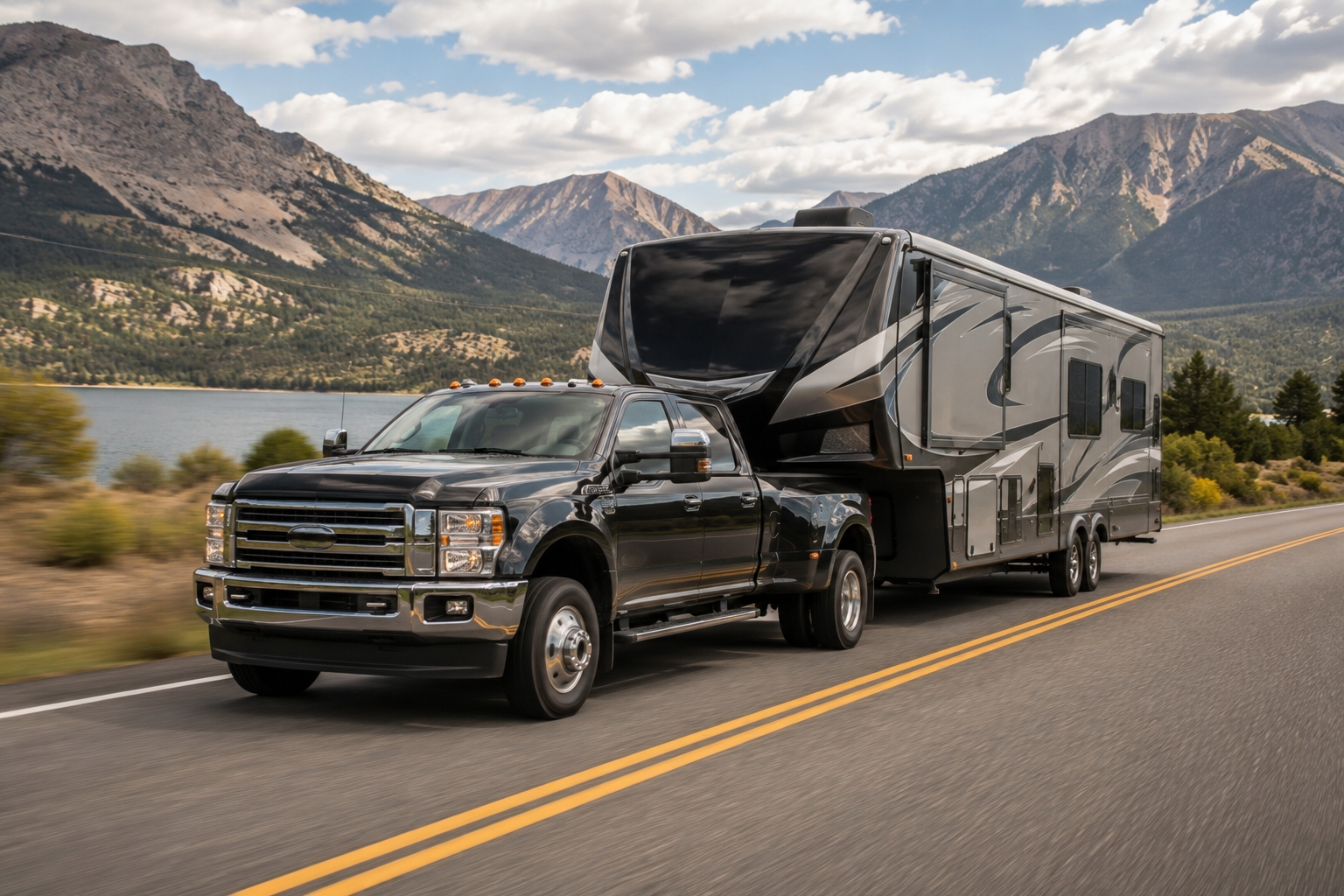
Fifth wheels connect through a specialized hitch mounted inside a truck bed rather than a rear bumper, which means the truck underneath that hitch matters just as much as the trailer itself. Getting this pairing wrong isn't just uncomfortable; it's genuinely unsafe, so knowing exactly what size truck you need before you shop saves you from a costly mismatch.
Featured Snippet Answer: Most fifth wheels require at least a three-quarter-ton pickup truck, such as a Ford F-250, RAM 2500, or Chevrolet Silverado 2500 HD, though larger or luxury fifth wheels over 15,000 pounds GVWR typically need a one-ton truck like an F-350, RAM 3500, or Silverado 3500 HD.
Understanding the Numbers Behind Truck Sizing
Four key weight figures determine whether a truck can safely handle a specific fifth wheel, and skipping any one of them is how owners end up overloaded without realizing it.
GVWR, or Gross Vehicle Weight Rating, is the maximum weight of your fifth wheel when fully loaded with water, propane, and gear, not just its empty dry weight. Pin weight is the portion of that GVWR transferred down onto the truck's bed through the kingpin, typically running between 15 and 25 percent of the trailer's total weight, with larger fifth wheels that have drop frames and forward storage often landing at the higher end of that range.
Payload capacity is how much total weight your truck bed and cabin can carry, covering the pin weight, hitch hardware, passengers, and any gear tossed in the back. GCWR, or Gross Combined Weight Rating, caps the maximum combined weight of your truck and loaded trailer together, and this number is often the one buyers overlook until they're already at a weigh station.
Half-Ton Trucks: Limited but Not Impossible
Half-ton trucks like the F-150, RAM 1500, or Silverado 1500 can tow select lightweight fifth wheels, but only specific half-ton-rated models under roughly 12,000 pounds GVWR. Owners going this route should stick to the widely recommended 80 percent rule, keeping the loaded trailer weight at or under 80 percent of the truck's max tow rating rather than pushing right up to the published limit.
Short-bed half-ton trucks also usually need a sliding fifth wheel hitch to prevent the trailer's nose from contacting the cab during sharp turns, since the shorter wheelbase reduces clearance considerably.
Three-Quarter-Ton Trucks: The Most Common Choice
Three-quarter-ton trucks such as the Ford F-250, RAM 2500, and Chevrolet Silverado 2500 HD cover the largest share of mid-size to large fifth wheels on the market today. Diesel-equipped versions of these trucks push towing capacity noticeably higher than their gas counterparts, often making the diesel upgrade worthwhile if you're shopping fifth wheels in the 13,000 to 16,000 pound GVWR range.
This class strikes a practical balance for most buyers, since it handles the vast majority of family-oriented fifth wheels without the fuel costs and stiffer ride of a full one-ton truck.
One-Ton Trucks: Built for the Largest Fifth Wheels
Heavy-duty one-ton trucks like the Ford F-350, RAM 3500, and Chevrolet Silverado 3500 HD offer the highest towing and payload capacities available in a pickup, with some diesel configurations exceeding 35,000 pounds of towing capacity. These trucks make sense once you're shopping fifth wheels above 15,000 pounds GVWR, or any luxury model with a residential-style kitchen, multiple slide-outs, and larger holding tanks that push weight up quickly.
Dual rear wheel, or DRW, configurations within the one-ton class add even more payload and stability for the heaviest trailers, though single rear wheel versions remain easier to maneuver for daily driving between trips.
Long Bed vs. Short Bed: Why It Matters
Long-bed trucks with an eight-foot bed are the standard recommendation for fifth wheel towing, since they provide the best turning clearance and the most straightforward hitch installation. Short-bed trucks, generally 6.5 feet or less, can still tow fifth wheels but usually require a sliding hitch to avoid the trailer's front cap striking the truck's cab during tight turns or backing maneuvers.
How to Match Your Truck to a Specific Fifth Wheel
Start with the fifth wheel's GVWR sticker, located near the entrance door or listed in the owner's manual, rather than relying on the lighter dry weight figure alone. Compare that GVWR against your truck's fifth wheel towing rating, which differs from its conventional bumper-pull rating and is usually higher due to the more stable hitch placement.
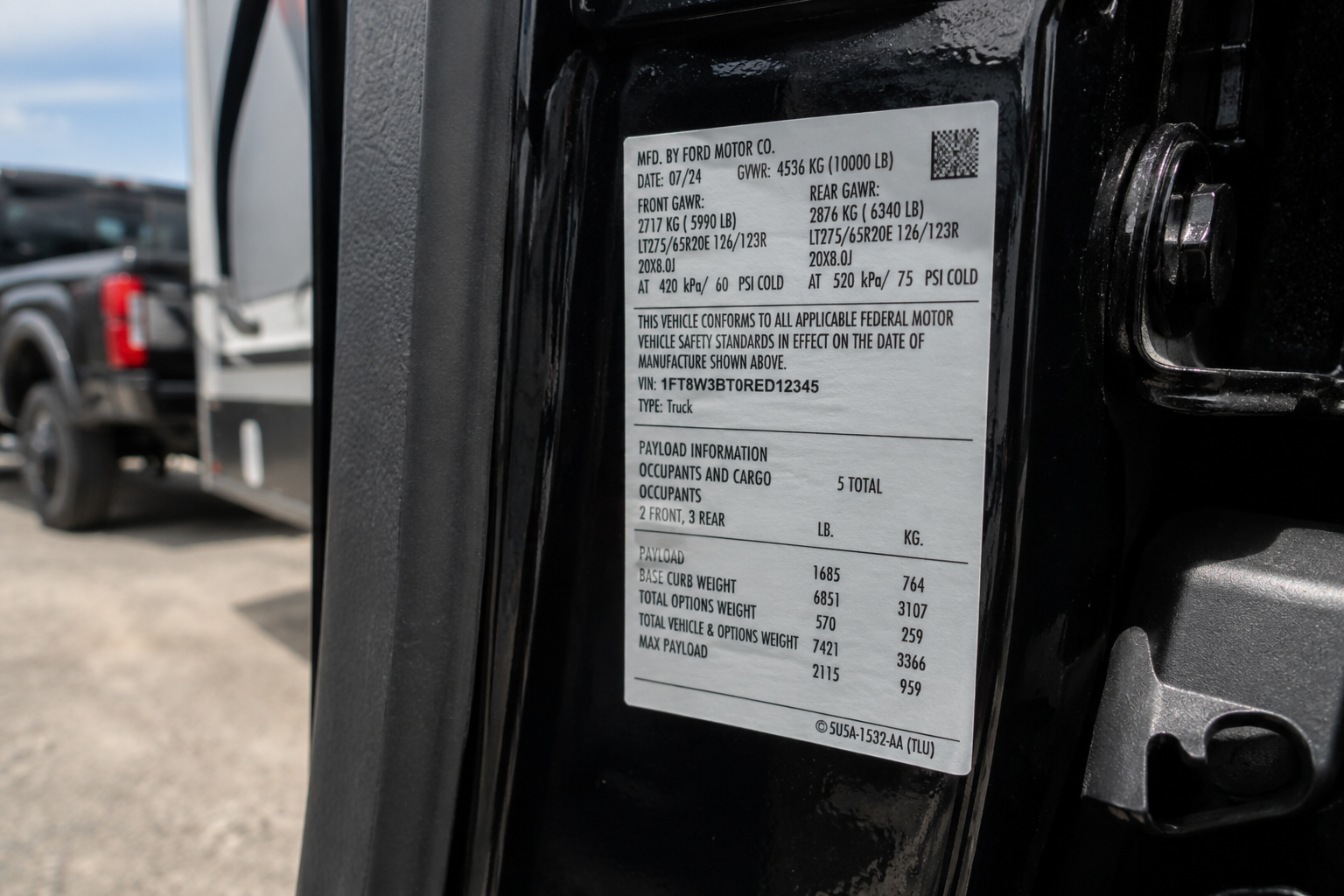
Check your truck's payload capacity sticker, found on a label inside the driver's door jamb, and confirm it comfortably covers the fifth wheel's pin weight plus passengers, pets, and gear you'll be carrying. If you're unsure after doing the math, a CAT scale weigh-in with your loaded truck and trailer gives you the definitive real-world numbers rather than relying on manufacturer estimates alone.
Common Mistakes That Lead to Overloading
Using the fifth wheel's dry weight instead of its GVWR when comparing against truck capacity
Forgetting to include passengers, pets, and cargo when calculating payload usage
Assuming a truck's conventional towing rating applies equally to fifth wheel towing
Skipping a sliding hitch on a short-bed truck, risking cab damage during turns
Ignoring GCWR and only checking towing capacity in isolation
Questions to Ask Before You Buy Either Piece
Ask what the fifth wheel's actual loaded GVWR is, not just its advertised dry weight, since dealers list dry weight more prominently but it rarely reflects real-world travel weight. Ask whether the truck you're considering has a factory tow package specifically rated for fifth wheel towing, since some trim levels quietly cap out lower than the model's advertised maximum.
Matching the right truck to your fifth wheel isn't about buying the biggest, most expensive option available. It's about running the actual numbers, GVWR against tow rating, pin weight against payload, so the pairing works safely for years of towing rather than becoming a problem the first time you hit a mountain grade fully loaded.